
18 Nov The Biggest LIES in Female Athlete Speed and Strength Training and ACL Injuries
There’s never a dull moment in the female athlete space. There’s always some sort of fear mongering when it comes to female athletes.
I’ve been in this industry a while, as a female athlete speed, strength and agility trainer to young girls for over 13 years in the Tampa Bay and Lutz Florida areas, as well as remotely. I work with girls on a daily basis and I truly want to empower them with different messaging than what they’ve been told.
In the early 2000s, it was the “girls are 2-5x more likely to get ACLs!” or “they have wider hips and are more prone to injury!”
Now, in 2025, it’s the big scary estrogen hormone and menstrual cycle fear mongering, making female athletes fear their bodies even more.
“Girls have more joint laxity during their ovulatory phase!” or “rising hormone levels increase ACL injury risk!” or “I need to put my daughter on birth control so she doesn’t have hormone fluctuations!”
It’s as if people make these fear mongering claims as if they have 100% confidence in their research.
Or could all this be just their own, misinformed opinion?
Fiction vs. Facts
Everyone thinks they know what is best for female athletes, but they don’t.
The same people who say to be empowering girls are scaring them that they’re more susceptible to injury, or can’t perform at a high level during certain times of their menstrual cycle.
It needs to stop.
Let’s tackle the top 3 biggest LIES in female athlete training:
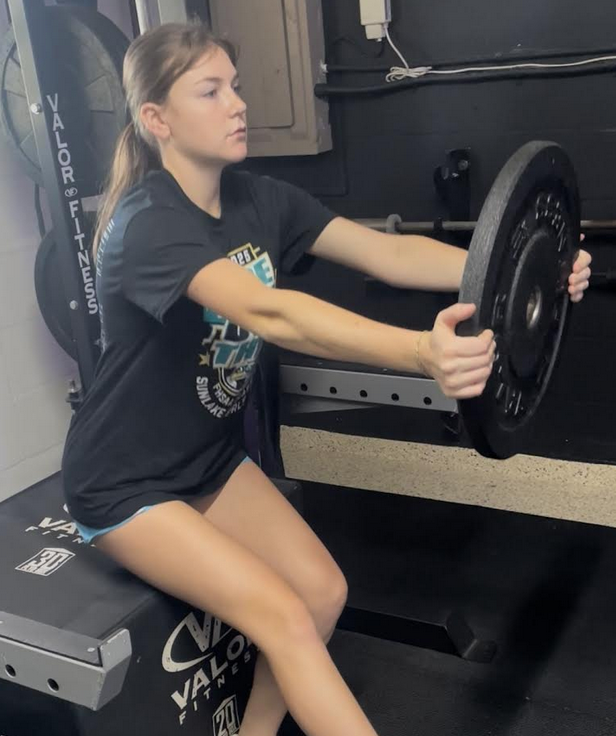
1. Female athletes need special injury prevention programs. False! There’s no such thing as a separate injury prevention program…it’s just proper strength training, and year-round. Girls must load and progress with heavier weights so they can truly build strength! They must also do plyometrics and deceleration (landing) drills year-round because motor learning with these take time. Injury prevention is NOT a dinky balance drill, or dinky warm-up…it’s a program. It’s also not doing flashy drills on social media so trainers can go viral. It’s a properly coached and progressed program, too. More on this in my solo podcast on ACL injuries:
2. Female athletes need more research. False! We have enough research to know what female athletes need for injury prevention and that is consistent strength training and performance programs. Female athlete bodies respond VERY well to consistent strength stimuli, proper nutrition, and proper rest days just like boys. Training doesn’t need to be different! And these are the lowest hanging fruit for injury minimization. There’s also no definitive data that muscle metabolism changes across the menstrual cycle.
Dr. Lauren Colenso-Semple did an amazing study HERE using muscle biopsies, the gold standard method for muscle metabolism research, and there was no difference in muscle building or protein breakdown during certain phases. She concluded that females just need consistency with strength training and muscle building nutrition more than anything, so they can train hard and compete across all phases of their menstrual cycles.
3. Hormonal fluctuation during the menstrual cycle cause increased ACL injuries. Also, false! The research is extremely confusing. Some studies say the ovulatory phase causes higher injury risk, while others point to the follicular phase causing more ACLs. The truth is: we just don’t know enough, so we’re better off sticking to what we know helps injury reduction and improved performance. You guessed it: consistent strength training, proper nutrition, and rest days. Before complicating training by adding in the menstrual cycle layer, let’s get our young female athletes in the gym and eating enough FIRST!
Expounding further, let’s say we did find something conclusive and all female athletes get hurt during a definitive phase…what then? Would we sit half the team out during a championship game when half are in their vulnerable phase? How would these girls feel if they were told to sit out?? It is a practical nightmare, and the psychological impact is far worse.
Let’s be proactive and just focus on what we know helps reduce injury the most.
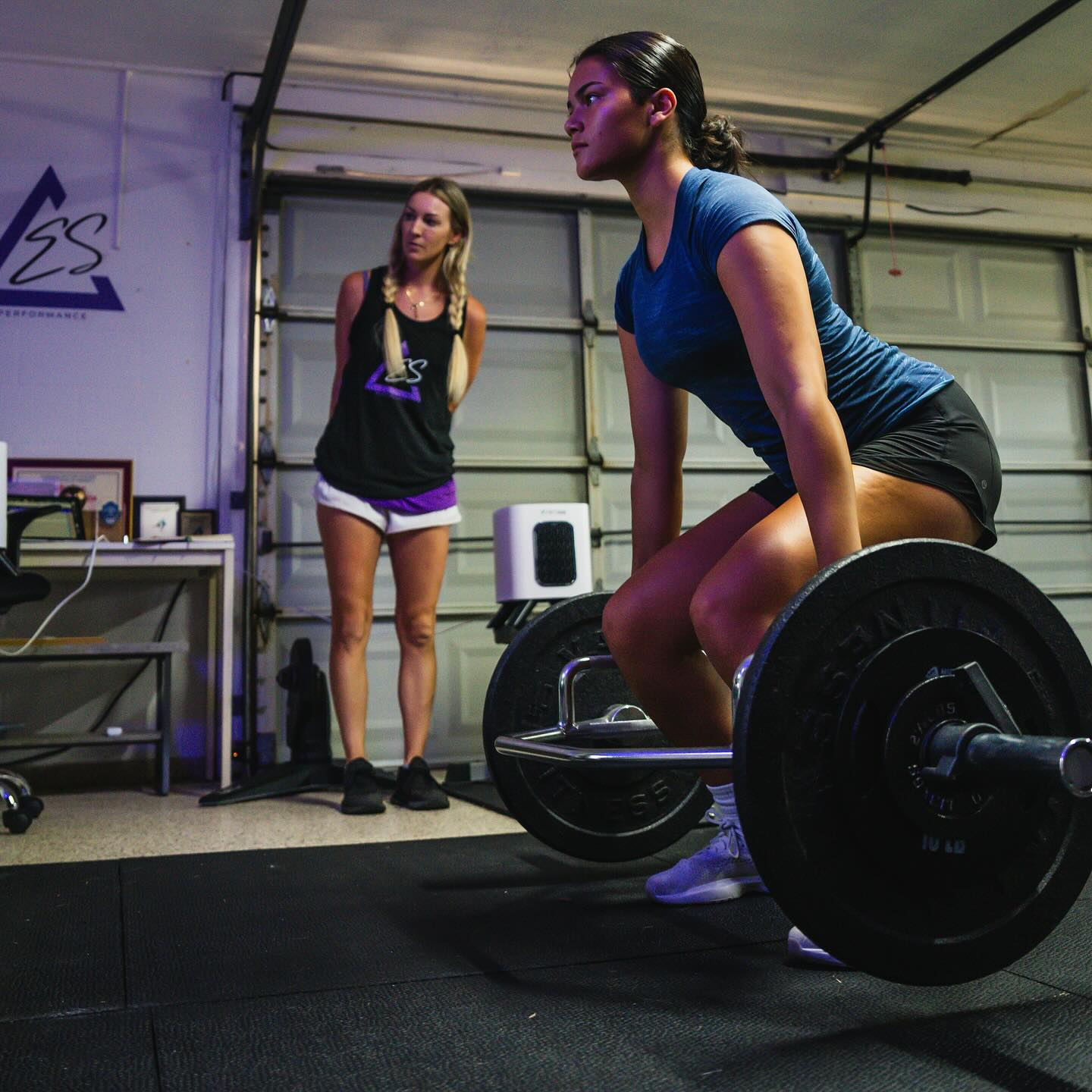
It really is about consistency with the basics for our female athletes. It’s not sexy, but it’s the truth.
I feel I’m always selling common sense back to people. I’m not here to sell a fancy menstrual cycle syncing program or female specific supplement stack for $2,000 a month.
I’m here to preach proper strength and conditioning programming, nutrition, and recovery days. That’s it. I won’t make millions selling these basics, but at least I’m staying in my integrity.
Let’s empower female athletes. They’re not broken. They can train hard like the boys. They don’t have to be told they’re delicate little flowers who need to be careful around certain times of their menstrual cycles.
In the 1900s, female athletes were told they were weaker because they had periods, and some medical journals suggested they don’t train hard and compete close to their periods due to fertility and injury issues.
Are we repeating history?
ABOUT THE AUTHOR

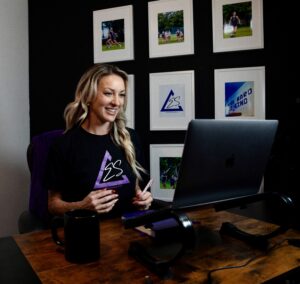
Erica Mulholland is a former college 3x All-American soccer player and now Hall of Famer from Johns Hopkins University. She holds a Master of Science in Exercise Science and is a Certified Strength and Conditioning Coach, who has been helping female athletes of all sports with speed, agility, strength, power, and conditioning for 14 years. She works with youth female athletes who want to become stronger and faster, as well as ACL rehab for female athletes in the later stages (over 3 month mark post-surgery) who want to return to sport better than they were prior to injury.
Work with Erica in Tampa and Lutz Florida for speed, agility, and strength training, OR late stage ACL and meniscus tear rehab (must be at minimum 3 months into physical therapy and post-surgery): BOOK ASSESSMENT HERE
Need more personalized help from Erica? BOOK A CONSULT HERE
Interested in Remote Training for Female Athletes? BOOK A CONSULT HERE
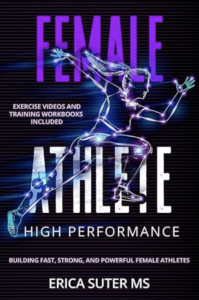
Get Erica’s book FEMALE ATHLETE HIGH PERFORMANCE
Check out her podcast: The Strong Female Athlete
No Comments