

23 Jan Strength Training for Girls Soccer Players is NOT OVER-DOING It During the Season
Changes of direction movements in soccer happen in forces of up to 8x body weight! Sports are far more risky.
What’s over-doing in-season is grinding 5-7 days a week with soccer and skill sessions. It’s the same repetitive, high speed movements, that overuse the same exact muscle groups.
– Controlled environment: puts girls in a controlled and gradually progressed environment with all eyes on them, teaching them movement quality and proper technique.

– Builds tissue tolerance: strength training actively reduces the risk of future sports injuries making tissues more resilient to sport stressors. The quads, hamstrings, gluteals, core and upper body need to be loaded with weights over time so they build true strength and can safeguard their joints, ligaments and bones.
There’s hundreds of exercises I can choose from to strengthen the injury without causing harm, and rather, empowering the athlete, such as isometrics, bilateral work first, or training all other limbs to keep the body durable.
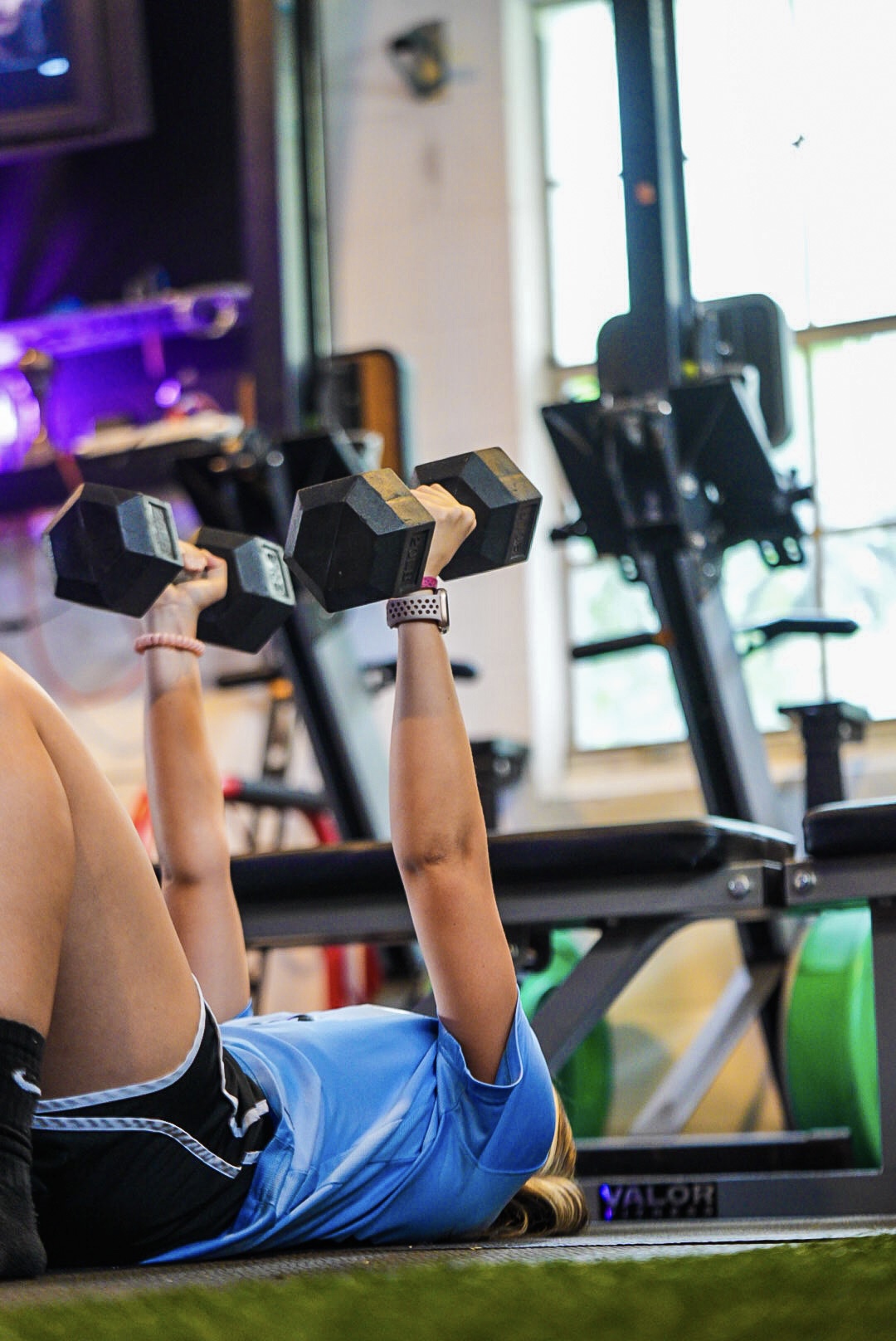
Exercise selection, gradual progression, periodization and proper sets/reps can help athletes train around a current injury, or reduce risk of a future injury during the season.
At some point, girls soccer players need to BUILD THEIR CAPACITY to handle high loads in soccer.
Strength training is not over-doing. It is protective.

So here is my ideal recipe for in-season training: 1-2x a week on practice days, so that days off from practice are fully off. Ideally, 1-2 full off days a week, which should be a Friday because no one has team practice on Fridays, and then one weekend day when no games.
Please, do not schedule a skills session on a Sunday if there was a game the day before. Especially if it’s with Joe Schmo who has no understanding of load management, and who makes girls soccer players tap through agility rings the entire hour. Now THAT would be over-doing because the movements are repetitive impacts on the same muscle groups, bones and joints that also happened in the soccer game the day before.
Over-doing in-season is letting soccer and skill specific work DOMINATE your weekly schedule, with no balance of strengthening other muscle groups.
Think of strength training as a different sport and stimulus than soccer. The movements build other muscle groups, correct imbalances and movement compensations that cause injury, and are low to non-impact.
And remember, recovery days are critical to get the most from an in-season strength training program, otherwise muscles will never be able to repair and get strong. (as an extra, using the Firefly Recovery Device HERE helps speed up recovery even more so you can train with quality outputs).
Athletes are able to speed and strength train HARD when recovered. The best results come from rest.
So don’t wither away in-season. Stay strong. Stay explosive.
The college soccer level is demanding and it is required girls strength train in-season 2x a week on practice days. Every college program has a strength coach who runs in-season sessions in the gym.
Get in good habits now.
You can’t go wrong getting strong!
ABOUT THE AUTHOR

Erica Mulholland is a former college 3x All-American soccer player and now Hall of Famer from Johns Hopkins University. She holds a Master of Science in Exercise Science and is a Certified Strength and Conditioning Coach, who has been helping female athletes of all sports with speed, agility, strength, power, and conditioning for 14 years. She works with youth female athletes who want to become stronger and faster, as well as ACL and meniscus surgery rehab for female athletes in the later stages (over 3 month mark post-surgery) who want to return to sport better than they were prior to injury.
Work with Erica in Tampa and Lutz Florida for speed, agility, and strength training, OR late stage ACL rehab (must be at minimum 3 months into physical therapy and post-surgery): BOOK ASSESSMENT HERE
Interested in REMOTE TRAINING for Female Athletes? BOOK A CONSULT HERE
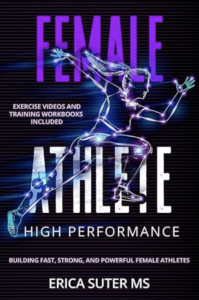
Get Erica’s book FEMALE ATHLETE HIGH PERFORMANCE
No Comments