
16 Jan BEST Youth and Teen Female Athlete Speed, Agility and Strength Training: Parents, What To Look For
Sports parents: beware of nonsense training for preteen and teen female athletes.
Seriously, BEWARE.
There’s a lot of bs out there that looks flashy and will make you “ooh” and “ahh.” Like a girl attached to a resistance band while icky shuffling through a ladder, then jumping over a cacophony of hurdles and tap dancing through rings. Or a girl attached to a band with a soccer ball at her feet, while she is hardly dribbling through cones. She’s. Not. Even. Going. Fast.
This is bs because there is no focused adaptation from these drills. It’s usually sloppy, feet are clunky, and landing mechanics end up being piss poor. There’s no precision.
It’s also predictable. The girl knows where she is going. This isn’t agility. It’s robot training. It’s actually making your girl slower and weak. Not to mention, causing painful overuse to her muscles, bones, and joints.
Too, proper deceleration training must start with no equipment to teach proper postures and positions so they can land well without falling over. We want them to learn to recruit the glutes and muscles surrounding the knee, taking the load off of the knee joint when they land from any jump.
Once mastered, then we add in the box.
For box jumps to even train proper deceleration mechanics, shoulders must be stacked on top of feet, chest up and eyes forward, with hips low and slight knee bend:

But sadly, most box jumps on social media are piss poor – kids are rounding their backs and falling over when they land. Their weight is on their toes, and it’s adding more stress on their knee joint, without recruiting the quads, glutes and hamstrings to fire.
And no, a 24″ box jump for my high school girl above is not appropriate for your under 10 year old, nor is a high depth jump off of a box. And don’t get me started on vertimax where they’re doing a vertical jump attached to resisted cables. Please, make it STOP.
Performance adaptations for kids under 10 are driven by neural factors. They don’t develop true strength and power until they have finished growing and are in high school.
When they’re older, adaptations are driven by muscular hypertrophy, strength and power, and the fundamental movements are loaded more:
We need to make training appropriate for where a girl is at. Just like we wouldn’t skip basic math and have an 8-year-old do calculus right away. Or an elementary schooler starts with ABCs instead of a full blown dissertation.
Girls must learn control of their own bodies first, and build coordination, balance, stability, and rhythm to be able to express the more advanced plyometric and strength movements later on in their development.
Don’t. Skip. Steps.
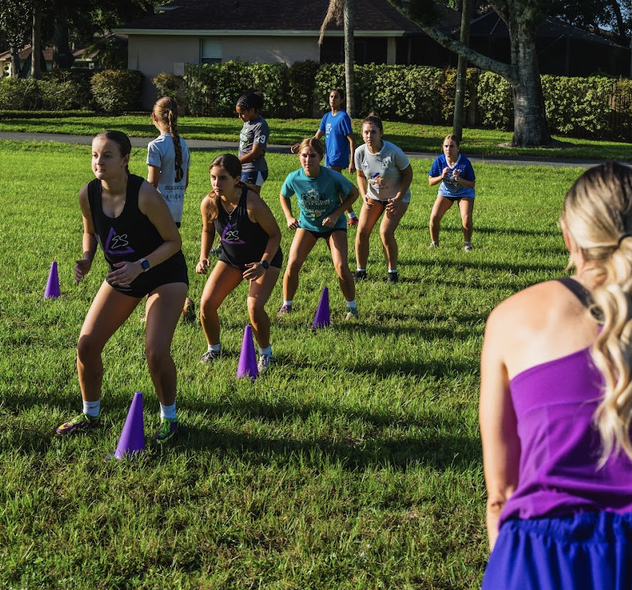
Too, any trainer that has a circus of equipment with random movements is duping you. “When you end up chasing too many rabbits, you end up catching none,” as the old saying goes. Each drill or fun game should be set up to get a specific adaptation, whether it’s focused deceleration training, or helping kids improve their spatial awareness and reactive ability.
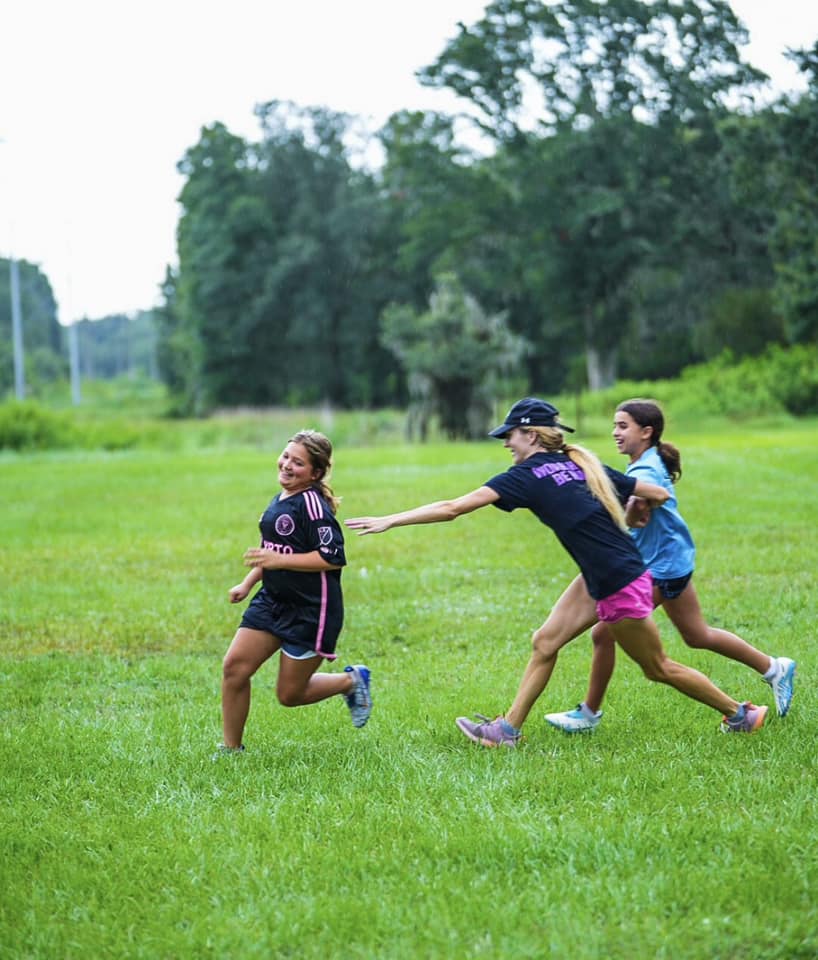
The truth is, the more rehearsed and complex the drill, the less true athletic development is happening.
Youth training should focus on fundamentals of movement, through play-based speed and agility pre puberty first, and then progress to harder plyometric/deceleration drills, loaded strength training and power development in the gym in high school and college.
I’d argue, though, even high school upperclassmen and my college girls still practice the fundamentals and continue to load the main lifts and gain strength relative to their body weight.
Some red flags:
– Complicated, flashy training for young children
– “Agility” that is rehearsed and a kid running through cones with the coach over instructing and telling them where to go
– 8 year olds doing exact same movements and loads as 16 year olds
– Drop-in sessions being allowed and no consistency required by the trainer
– Girls falling over during jump and landing drills and not being corrected on their technique
– A trainer saying “good job” aka NOT COACHING as a teenage girl has knees caving in during jumps and is clearly struggling.
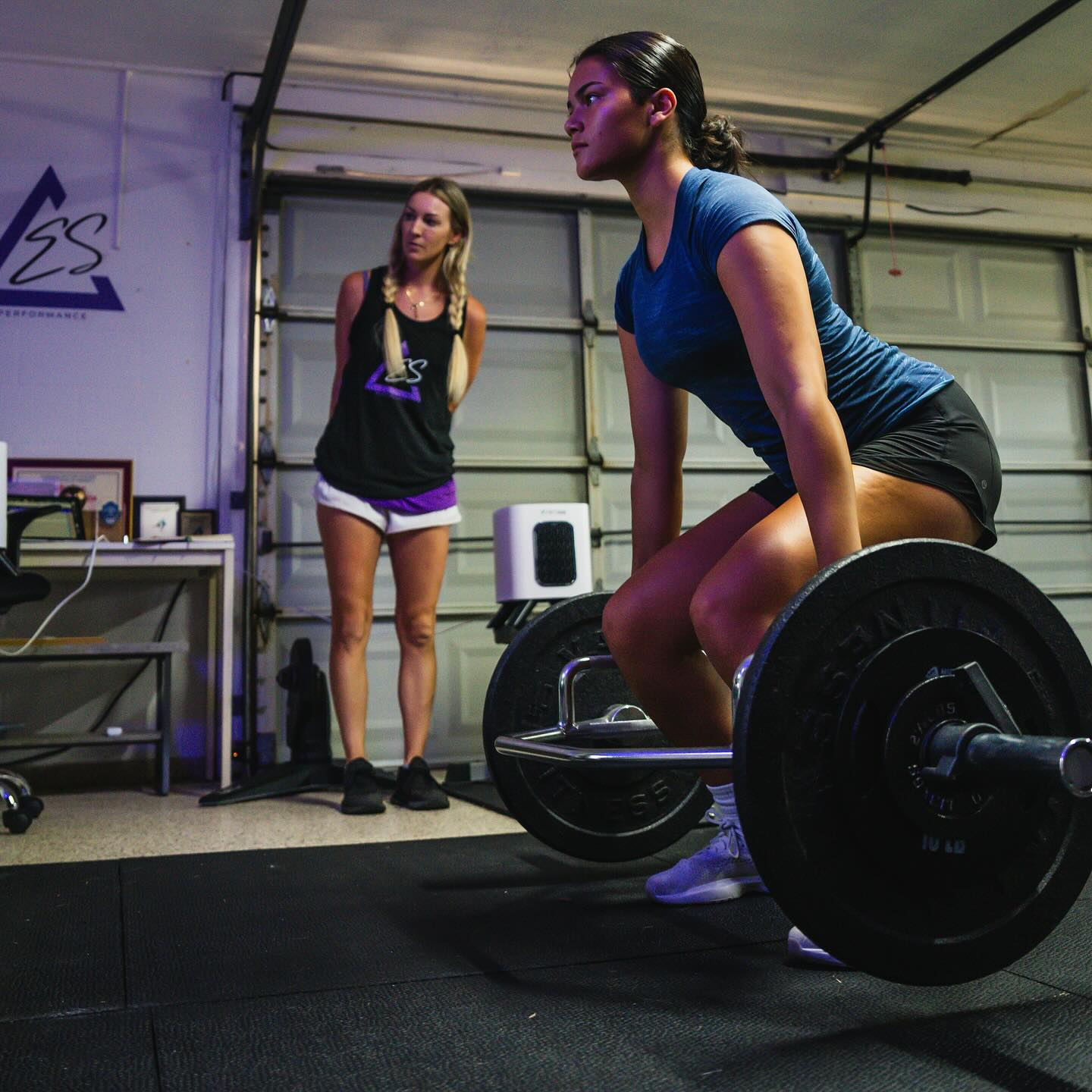
– A trainer sitting while the athlete is working out
– No individual programs for middle and high school and college girls, instead they all do the same, general whiteboard workout that is a circuit of random exercises and not age/level specific.
– No tracking of strength and speed for high school and college athletes (oftentimes, I see speed programs not even timing girls!)
– No progressive overload for high school and college athletes
– Trainer doesn’t have insurance!! (and I’m talking remote, too. There’s a ton of remote coaches who don’t have remote training specific insurance).
– Remote trainers who haven’t trained a single athlete in person in their lives (another issue…the remote coach has no hands-on experience. There’s a lot of remote coaches out there who have no training experience or a large body of work to show for). Beware of the young coaches fresh out of college just starting out who have no training experience and who sell online programs.
Some green lights that are quality youth training:
– CSCS certification, Bachelor’s or better yet, Masters in Exerise Science
– Insured
– Simple and fundamental focused
– Exercise selection, load, and dosing (sets/reps) based on age, exercise history, injury history/injury status, and individual biomechanics, in-season vs. off-season

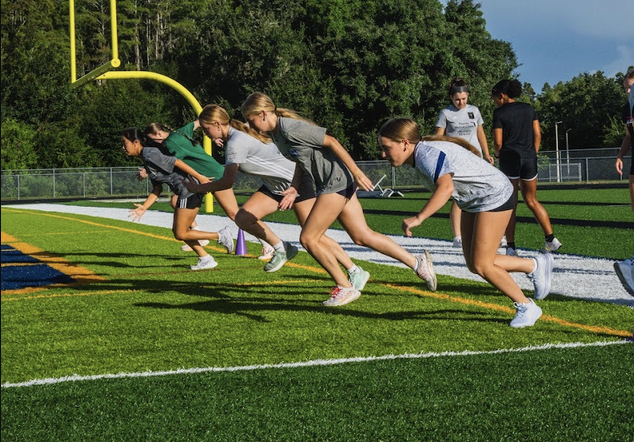
– Kids under 13: more play based games for speed/agility (tag, racing, mirror, and small sided games, crawling, climbing, Tug of War, handball)
– Girls older than 14 (progressed strength training and heavy lifting, and consistently in-season training to prep for college)
– Deceleration being coached and NOT a bunch of random drills with no correcting of technique. Deceleration is a skill that must be taught.
– Progressed agility drills with unpredictable stimuli so girls can move in new ways and experience deeper ranges of motion through chaos
– Monthly memberships that require consistency (true speed and strength development only happen with consistency, NOT a drop-in session for all but once a month)
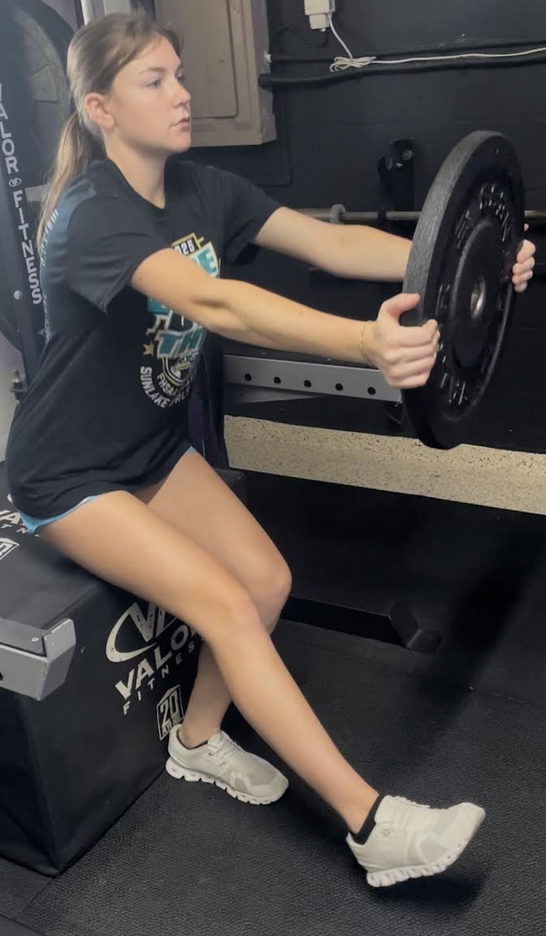
– Tracking of speed times on the main acceleration and top speed drills for older girls (10 yard dash, 10 yard fly) so they can see improvements over a long period of time:
We use the Freelap Timing system for all speed data. It’s very important a coach has a timing system they measure every sprint with to keep testing consistent and reliable.
All of my athletes here in Tampa Florida I see weekly. And many have trained with me for several months, some for YEARS from middle to high school to college. I’ve seen them all the way through the long-term athletic development process and incredibly grateful I get to actually develop these girls.

They thrive and stay healthy because I can actually COACH them and progress their programs. Half the battle to improving strength and speed is…showing up long-term.
HERE is a podcast I did on the speed improvements of two athletes, Athlete 1 who only trained for two months, and Athlete 2 who trained speed YEAR-ROUND. The speed results were insane for the year-round athlete…duh. 😉
Obviously I can’t work with everyone – my remote training is pretty tight and my in person groups are limited, which is why I wrote this blog.
I want parents to find someone in their area who knows what the hell they’re doing with youth – from preteen to teen female athletes. They understand the process of performance and health during adolescence all the way through college.
If you don’t train with me, at least I know your girl is under great care with someone else.
So here’s my list of the BEST youth speed, agility and strength coaches across the country, who have experience with middle, high school, and college female athletes, and who specialize in long-term athletic development. No fluff. No nonsense.
Only true long-term athletic development under a safe, progressed pathway, and people who have coached youth girls for DECADES:
Lee Taft – North Port Florida
Mike Boyle – Boston Mass
Dave Gleason – Pembroke Mass
Jeremy Frisch – Clinton Mass
Emily Neff – Hatfield PA
Heather Clapacs – Avon Ohio
Zak Woodward – Denver Colorado
Mark Shropshire – Longmont Colorado
Coach Oriana – Tuscaloosa Alabama
Ray Zingler – Marietta GA
Joe Aratari – Rochester NY
Austin Jochum – St Paul Minnesota
Brendan Thompson – St Louis MO
Mike Robertson – Indianapolis IN
Mike Whiteman – Pittsburgh, PA
Coach Joe Hos – Newtown PA
Jeff Moyer – Bethel Park PA
Jessica Burke – Chicago IL
Johnny Tea – Los Angeles CA
Matt Tennie – Northport NY
Gerry DeFillipo – Wayne NJ
Carmen Bott – Vancouver Canada
Daniel Back – Austin TX
Missy Mitchell-McBeth – Dallas TX
Scotty Smith – Green Bay WI
Cynthia Monteleone – Maui, Hawaii
Rachel Nuzzolese Soccer by Rachel – Columbia MD
Healthy Baller Gym – Fairfax VA and Rockville MD locations
I know I forgot a handful, but as I remember some folks, I’ll add to the list.
So keep checking back for your area. 🙂
IMPORTANT:
Yes, many of us have and still work with D1 athletes and pros, but you should hire us based on our experience with TRAINING YOUTH under a long-term model from middle school to college, our ability to write individualized programs, and connect with your athlete for their long term development.
Can we write a program that is dosed properly for a 17 year old in-season ECNL player who practices 5x a week so she is not overusing?
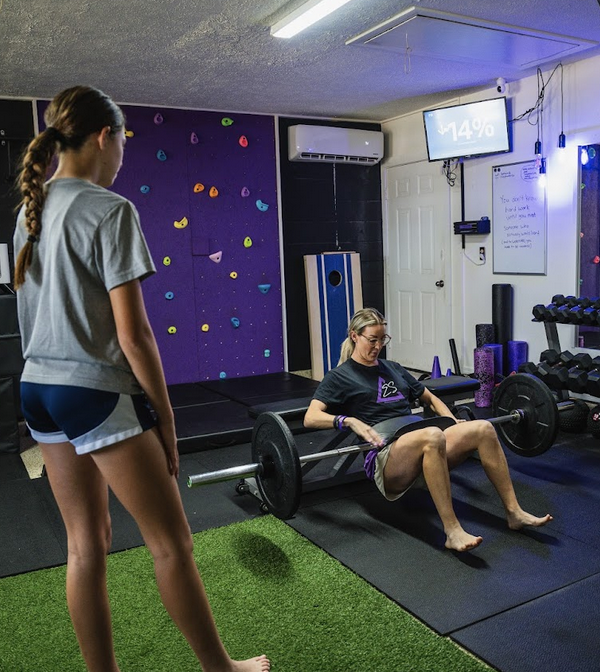
Can we COACH an awkward 13-year-old during her growth spurt how to LAND and DECELERATE properly without falling over? Let alone, make her REDO her reps with the proper cues so she responds with crisp technique?
Can we give a college freshman an off season program where she is focusing on the right things at the right time with the right doses so she goes into preseason fresh and fast?

Watch this podcast below with one of my first athletes I ever trained.
I started with her at age 12 and saw her all the way to D1 college soccer at UNC, and now she’s autonomous with her workouts as a pro player:
Additionally, if I’m going to mention the best practioners out there, I need to also shout out the best researchers, too. Because the best youth speed and strength coaches apply the science on performance and injury reduction.
Below is a list of academics who have committed their research to proper training and injury reduction for strong, healthy youth female athletes, from pre puberty to after puberty:
Dr. Tim Gabbett
Dr. Joe Esienmann
Dr. Rick Howard
Dr. Tony Moreno
Dr. Avery Faigenbaum
Dr. Sean Cumming
Dr. Jayanthi
Dr. Tim Hewett
Parents, please, follow the right people who are doing quality research, as well as hire the coaches who are putting the research into practice.
Don’t hire a trainer based on their following or flashy nonsense on social.
In fact, the more simple and less viral training looks, the better.
ABOUT THE AUTHOR

Erica Mulholland is a former college 3x All-American soccer player and now Hall of Famer from Johns Hopkins University. She holds a Master of Science in Exercise Science and is a Certified Strength and Conditioning Coach, who has been helping pre teen, teen and college female athletes of all sports with speed, agility, strength, power, and conditioning for 14 years. She works with female athletes who want to become stronger and faster, as well as ACL rehab for female athletes in the later stages (over 3 month mark post-surgery) who want to return to sport better than they were prior to injury. She offers speed training in Lutz, Florida.
Work with Erica in Tampa and Lutz Florida for speed, agility, and strength training, OR if you’re wanting to come back stronger and faster after an ACL tear or overuse injury: BOOK ASSESSMENT HERE
Interested in REMOTE TRAINING for Female Athletes? BOOK A CONSULT HERE
Get Erica’s book FEMALE ATHLETE HIGH PERFORMANCE
No Comments