

12 Apr Speed, Strength and Agility Training: Why ALL Youth Female Athletes Need It Year-Round
My job is simple: turn young female athletes into beasts.
It’s my one mission year-round.
And I’m not talking for a quick few weeks where I train someone under a pathetic lessons model where I hardly see them. Or, they do training for a short stint of time and wonder why they never actually became a beast.
Speed, strength, and agility training must be a year-round pursuit.
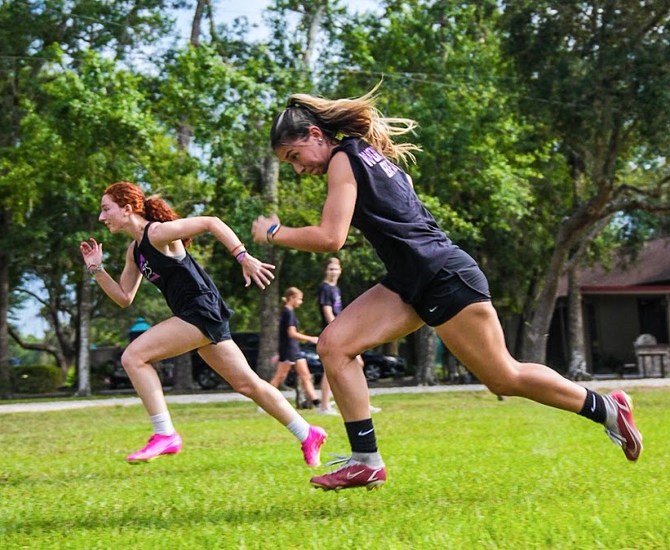
Speed is a skill. It takes time to clean up mechanics, learn proper positions and joint angles for better acceleration and max velocity sprinting.
Strength is a skill. It takes time to learn the movement patterns, nail down technique, and then load the lifts more over time.
Agility is a skill. It takes time to how to control your body under high speeds, rapidly change direction, all while reacting quickly to an externals stimulus.
I repeat: speed, strength and agility are skills.
With that said, why would you only train a skill for a few weeks or a few months out of the year?
Skills must be repeated and progressed.
What if you only practiced your sport for two months in the summer, then took off the other 10 months? Would you actually get better at your skills?
Speed, strength and agility training is no different, and I’d argue, these skills take much more work to truly nail down to be fast, strong, and resilient to injury.
One Mission, Two Groups
Coming back to my one mission, it’s narrowed down into the mission of turning female athletes into beasts who are robust so they perform at a high level.
I’m a certified strength and conditioning coach who has been blessed to work with youth female athletes, both healthy ones, and ACL/meniscus injured ones.
For the healthy girls who have been lucky enough to not suffer a season ending injury, I encourage them to still train year-round. This is because consistent strength training keeps the muscles strong for better speed and agility, and more protected bones and joints. Strength training shouldn’t be optional for female athletes…it should be mandatory.
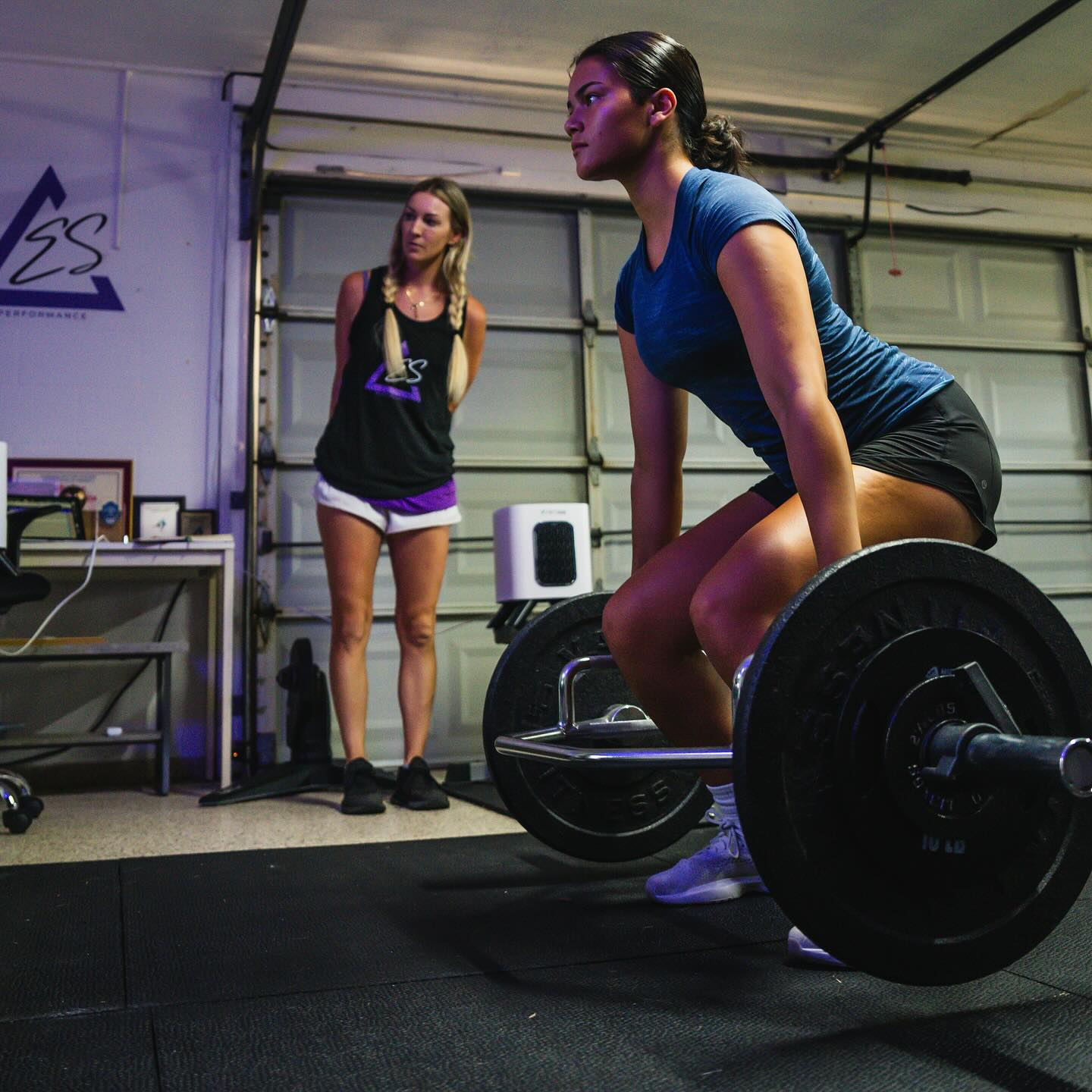
I’m grateful I have a large group of girls who continue to train in the gym during the season, and they thrive. Looking back at 14 years of being a strength coach, the girls who spent a year or more with me consistently in the gym 1-2x a week never suffered any season ending injuries like an ACL. Of course, injuries are multifaceted, but strength training is the lowest hanging fruit that will protect girls from 12 months or more off from their sport.
ACL Injured Athletes
Another group I work with are girls who come to me halfway through their ACL physical therapy and rehab, who have never done serious speed, strength and agility training before.
They recognize that physical therapy is not enough to prepare for the demands of their sport, and they need a strength professional to load them heavy, build strength and power, condition them, and run them under high speeds so they’re ready for their first game back.
One of the biggest mistakes of traditional rehab programs is girls aren’t prepared enough for:
– Hundreds of sprints and changes of direction
– Speeds of over 14 MPH in the game
– True agility which involves fast decision-making and extensive cognitive training
A strength and conditioning professional’s job is to bridge the gap between physical therapy and return to sport, and girls who have had ACL/meniscus surgery can begin with a strength coach the moment they have all swelling and pain down, full range of motion back (can squat at 90 degrees), and are cleared to jog.
All of these are green lights to start strength training seriously.
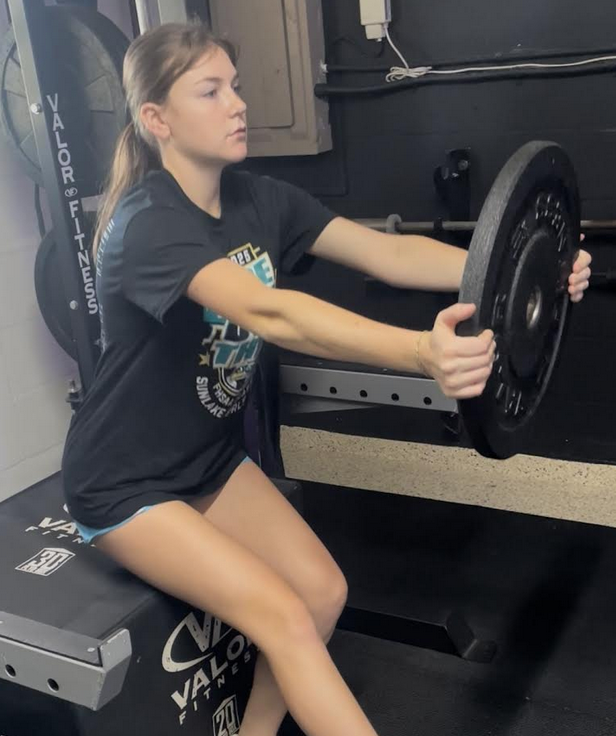
I love working with ACL injured athletes who are in return to sport because I get excited to really change them and help them have the greatest comeback of all time.
This is because I spend 3x a week with them for several months and we can really train hard. To that end, ACL return to sport training should challenge a girl and progress her well. Gone are the days where rehab should only have 20lb dumbbells and just a stability ball.
Done diligently, girls progress from movement patterns, then slowly load heavier over time. I’ve had girls come to me who had the worst muscle atrophy, even after MONTHS of physical therapy, they still had NO quad, NO hamstring, and NO calf definition. This is because they aren’t loaded enough, even in the final phases.
Toward the end of ACL rehab, girls should have quads popping, hamstring lines showing.
AND they should have a ripped upper body.
Yes, we do pull-ups, rows, and push-ups and various trunk stability exercises (side planks, Copenhagen planks, bear crawls) during ACL return to sport to build a fully resilient athlete.
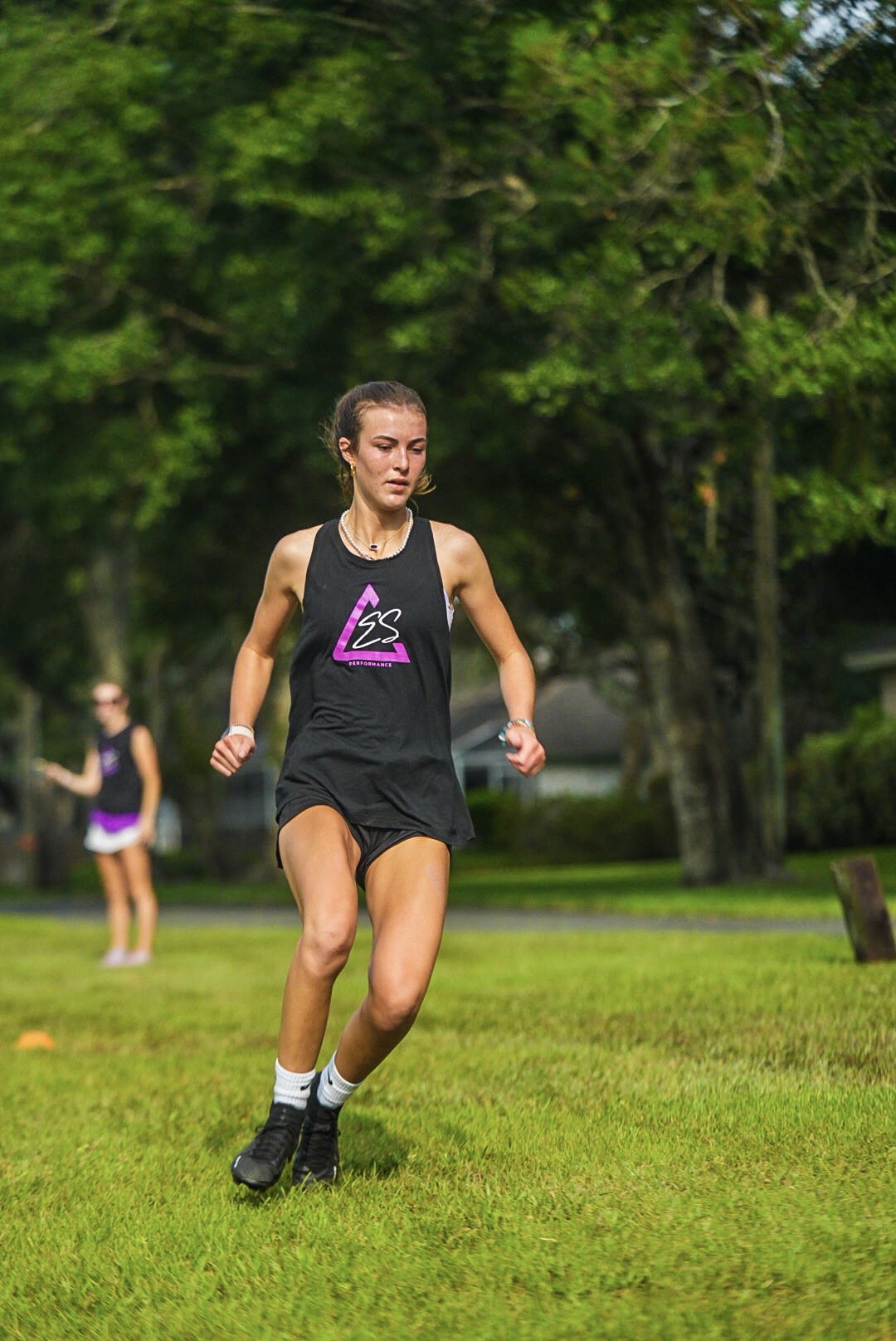
The upper body and core play a massive role in efficient deceleration and change of direction movements, and ensuring girls don’t lose balance. We want all 180 degree turns to look like this, where the shoulders are leaning in the direction of travel.

So how to find a good strength and conditioning coach for ACL return to sport?
Look for these things:
– Facility: do they have a full gym with heavy enough weights, barbells, pull-up bars, boxes, sleds, and a field space of over 50 yards for high speed runs?
– Body of Work: have they worked with the youth female athlete population for years, both healthy and ACL injured athletes? Do they work with them on a daily basis? Do they coach true plyometrics? (Read what I mean HERE)
– Assessment: have you watched their assessment process? You can get a good idea if someone is quality when you watch their assessment and how well they explain your athlete’s strengths and deficiencies.
– Results: what are their reviews and testimonials?
Re-Tears
It’s worth mentioning that ACL re-tears are highly prevalent due to parents not doing their research on the right professional for the return to conditioning phase. Re-tears are highly likely because the athlete didn’t train hard enough, and then their first game back the demands are so high, they fatigue fast and the ACL breaks down.
Or, if not a re-tear, a girl goes back and gets another nagging injury, like shin splints or knee pain because her body wasn’t fully prepared for the sprints and changes of direction.
It’s NOT normal to go back in pain. That means her return to sport rehab was not thorough enough.
I highly recommend watching this podcast on red flags in rehab programs:
Sports parents: I urge you, do your research and make ACL return is diligent. You do not want your daughter going through this awful process again.
Make sure she truly trains. Not only will she come back healthier and better, but she will learn consistent habits of proper strength training for a lifetime.
The same goes for girls who haven’t been injured yet and are playing their sport. They must in-season strength train, otherwise muscles will atrophy and lose strength as quickly as 4 weeks off from a strength stimulus.
Keep strengthening.
Your female athletes deserve to be strong and confident.
ABOUT THE AUTHOR

Erica Mulholland is a former college 3x All-American soccer player and now Hall of Famer from Johns Hopkins University. She holds a Master of Science in Exercise Science and is a Certified Strength and Conditioning Coach, who has been helping female athletes of all sports with speed, agility, strength, power, and conditioning for 14 years. She works with youth female athletes who want to become stronger and faster for their sport, as well as ACL and meniscus surgery return to sport for female athletes in the later stages (over 3 month mark post-surgery) who want to return to sport better than they were prior to injury.
Work with Erica in Tampa and Lutz Florida for speed, agility, and strength training, OR late stage ACL rehab (must be at minimum 2-3 months into physical therapy and post-surgery to be considered): BOOK ASSESSMENT HERE
Interested in REMOTE TRAINING for Female Athletes? BOOK A CONSULT HERE
Get Erica’s book FEMALE ATHLETE HIGH PERFORMANCE
No Comments