

19 Jun Girls Soccer ACL Tears: So Many Fear ACL Injury, But Very Few Do Anything To Prevent
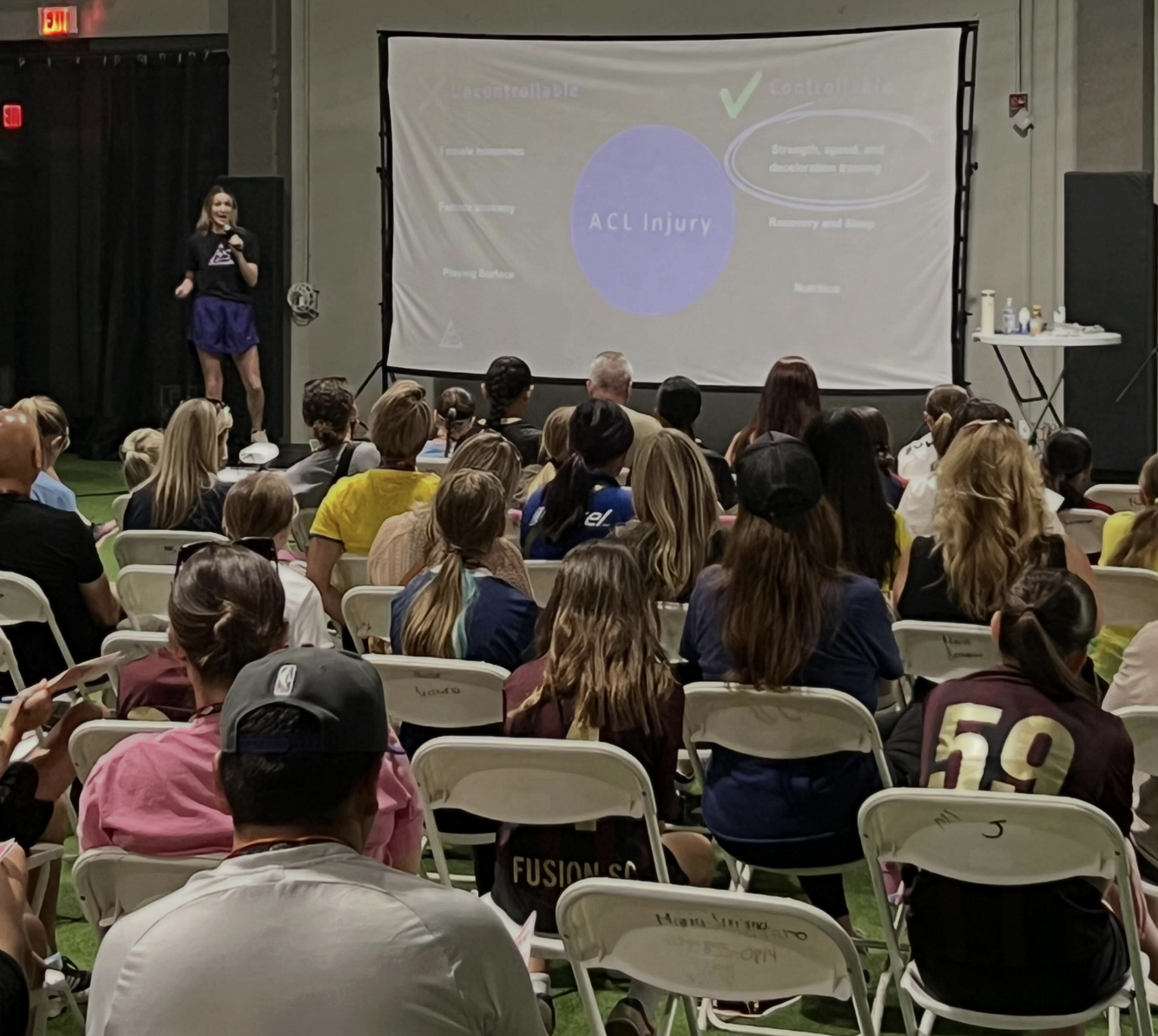
This past weekend, I was blessed to have the opportunity to travel across the country to San Francisco, California to speak at the first ever Girls Soccer Network Soccerista Fest.
Fun fact: I haven’t been to the Bay Area in over 20 years, so when the CEO of Girls Soccer Network told me I’d be able to get girls soccer players, their coaches, and parents in the same room and speak to them, I immediately said YES.
Sure, I’ll fly across the country from Tampa to San Fran for all but 40 hours, speak, then turn around and come home just in time for Monday speed with my own athletes. Let’s do it!
This is because I had a VERY important message to deliver: ACL injuries are NOT a female problem.
I know, I know. This is literally the opposite of what you’ve been told by the media headlines, TikTok, and everywhere you look online.
The message is always, ‘oh, you’re female! You’re at high risk for ACLs. Can’t do much!’
The Truth About Females and ACL Injuries
More than the female factor, training environment, load and recovery have far more impact on ACL injury risk.
If a girl is doing too much soccer load and not enough strength training to support the high speed movements in practices and games, she’s at a much higher risk of an ACL tear.
Why?
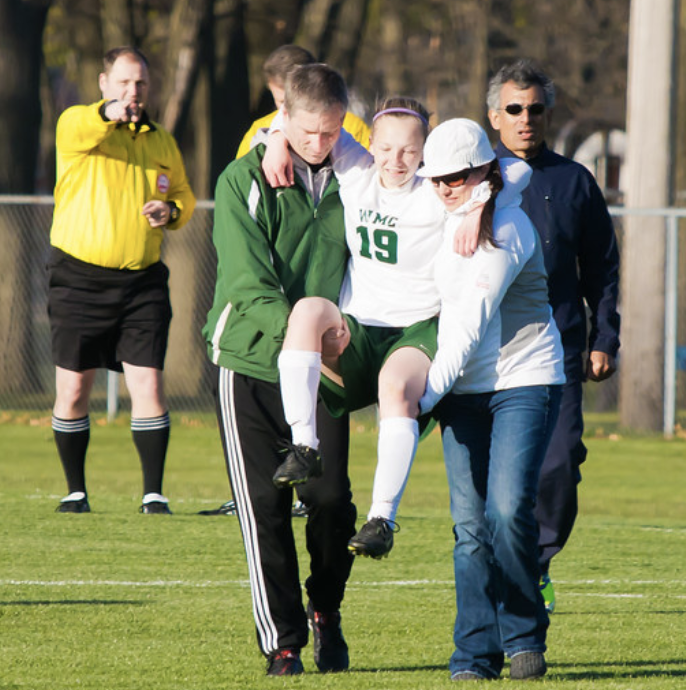
Because movements in soccer like sprinting, cutting, jumping, and changing direction all degrade the ACL. They’re more stress and mechanical load on the knee than a barbell back squat and heavy deadlift.
Too, the muscles undergo the same, repetitive loading from soccer, which doesn’t make them strong. It keeps them in a broken down, catabolic state.
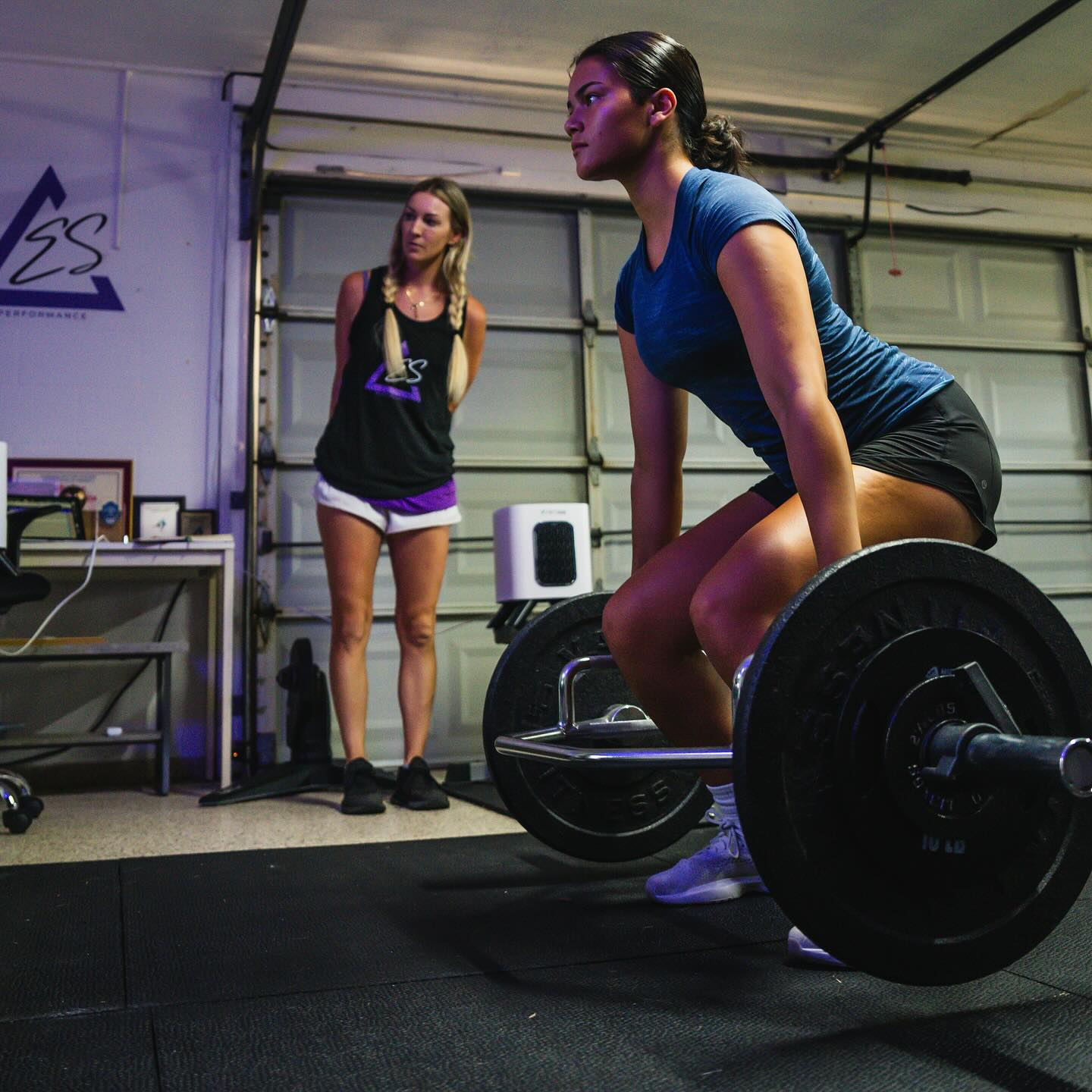
The muscles must have a stimulus that is different than the game, and one that progresses over time with more weight on the bar, so they can truly become strong and protect the knee joint.
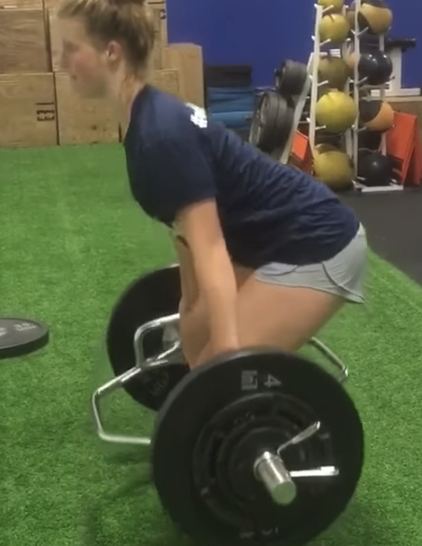
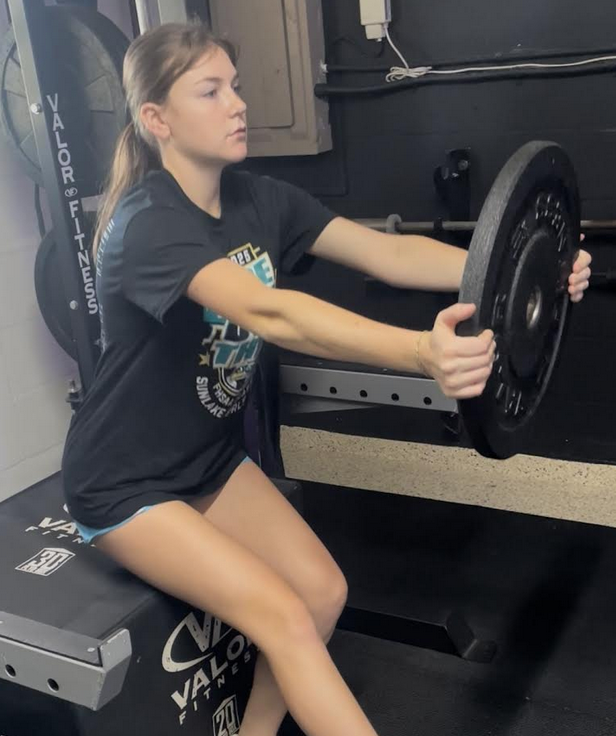
The quadriceps, hamstrings, glutes, and calves all safeguard the knee, and the only way to get them stronger is to do progressive strength training with more weight on the bar over a long period of time.
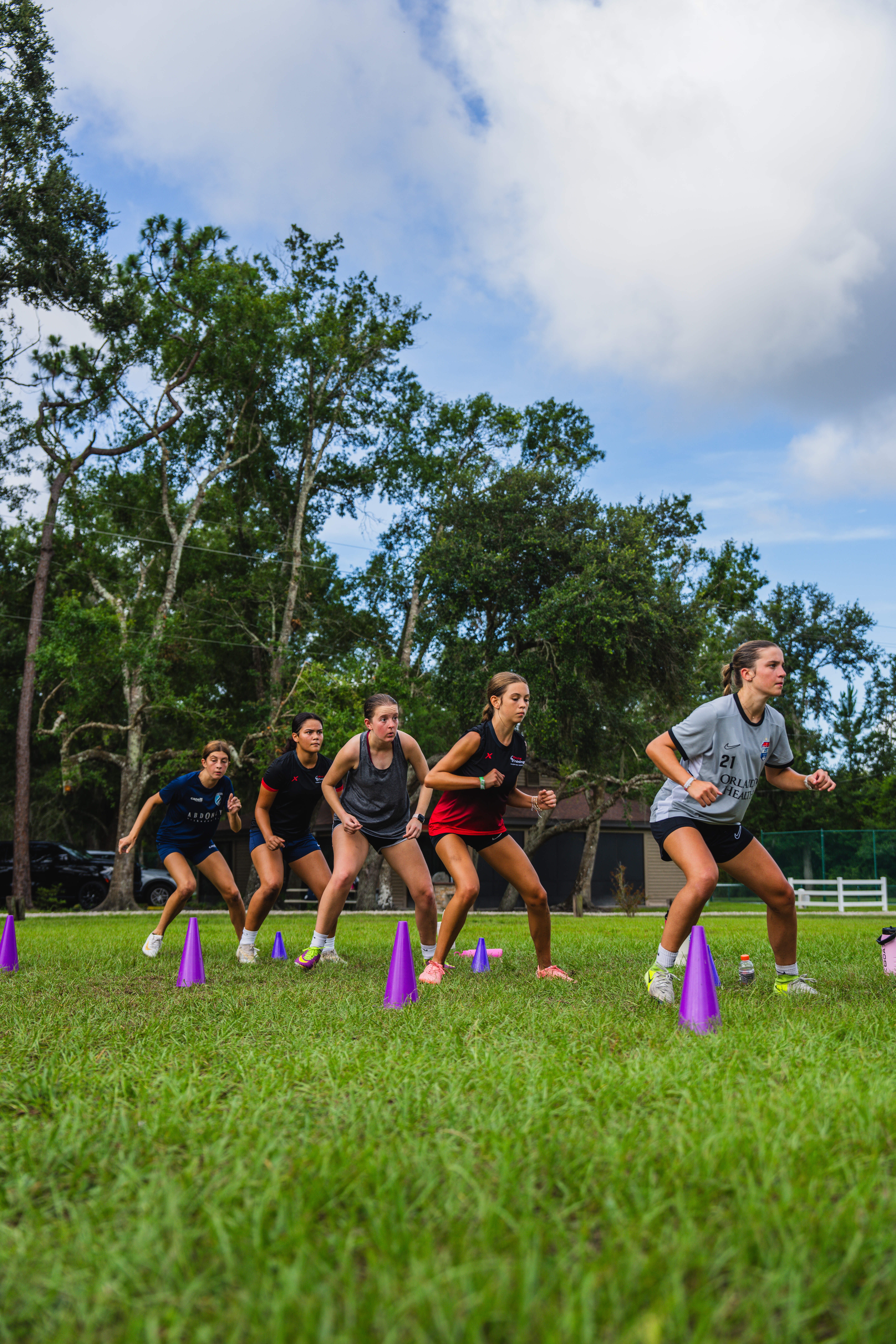
I have a core group of girls soccer players here in Lutz, Florida who do strength training year-round. They stay healthy. They don’t wither away. And they continue to raise the ceiling on their speed and strength.
The Sad Reality of Girls Soccer as a Whole
The craziest thing about all of this is when I asked the room of girls soccer players, their parents, and coaches at the Girls Soccer Network Soccerista Fest if anyone feared ACL injuries, everyone raised their hand.
Then I followed up with, “who here is strength training year-round?”
No one raised their hand. And this was a room of 100 people.
I’m going to put this bluntly: I feel SORRY for girls soccer players today. Most of them are weak, uncoordinated, slow, and not athletic.
They spend way too much time in soccer skill work, running, running, running (movements that degrade the ACL and make you slow), and not enough time doing true physical development with stability, mobility, speed, strength, power, and deceleration.
Who’s To Blame for This?
Look. It’s not these girls’ fault. It’s the adults in their lives, the parents and coaches, who are holding them back from the physical development side of their game.
Not only are they at high risk for ACL by not doing any year-round strength work, they’re going to plateau in their speed and agility.
Parents think more skill work is better. Parents think strength stunts growth. Parents think in-season strength is “overdoing” it. (Watch a podcast HERE on in-season strength and how my girls thrive and stay healthy doing in season work!)
Worse yet, coaches and clubs say they are about development, but at the same time, are closed off when it comes to referring their girls players out to local strength specialists.
Or, maybe they have a club-wide strength coach for 10 teams, which makes it impossible to deliver a quality service with detailed attention to the players. There’s no load tracking, individual programming…instead, just whiteboard, random circuits of the day.
We need to do better by our girls soccer players for ACL injuries.
We must give them quality training environments.
We must provide them with expert and professional strength coaching.
We must have them work with certified, educated, and insured trainers who have been strength coaching youth girls for years.
NOT hand them over to the club coach who played D2 soccer and majored in communications, who has a basic personal trainer cert, and is running a summer off season plan of burpees and suicides he got from Chat GPT.
And most critically, we need to stop blaming the female factor.
It’s easy to blame female anatomy, hip angles, and their menstrual cycles.
But it’s hard to prioritize strength training year-round. It’s hard for parents to say ‘no’ to every skills camp and clinic. It’s hard for clubs to open up and refer out to real experts.
It’s hard.
But the hard things are what will make our girls soccer players thrive once and for all.
It’s time for true female empowerment for our girls.
Stop blaming ACLs on them being female, and change their training environment once and for all.
Stop blaming their menstrual cycles, and get them in the gym year-round with a certified, qualified professional.

And until you do these, stop blaming the female factor.
So many fear ACL injury, but very few of you do anything about it.
Be the one who does something once and for all.
Your girls deserve it.

Work with Erica Mulholland, an internationally known youth female athlete trainer in Tampa and Land O’ Lakes Florida for speed, agility, and strength training, OR late stage ACL rehab (must be at minimum 2-3 months into physical therapy and post-surgery to be considered): BOOK ASSESSMENT HERE
Interested in REMOTE TRAINING for Youth Female Athletes? BOOK A CONSULT HERE
No Comments