
01 May NO BS Agility Training in Tampa Florida: Best Agility Drills for Youth Athletes
Think of the best athletes in the world.
Who comes to mind first?
Maybe it’s Messi, with his dazzling moves, sharps cuts, and rapid turns against pressure to crack a shot on goal.
Or maybe it’s Lamine Yamal with his exceptional vision to blast up the field and juke defenders left and right.
Whoever it is, the best players possess elite agility.
What Agility Is NOT vs. What Is True Agility
Agility isn’t ladder drills. Nor is it tapping your feet through rings. Those are quick feet drills.
Agility also isn’t doing a structured drill where you know where you’re sprinting.
True agility encompasses so much more. Too often, people dumb agility down to a bunch of running and ladder drills, when it’s really a holistic performance program that involves the strength as the foundation, deceleration training, acceleration training, reactive strength, elasticity, and reactive/nervous system training.
Dr. Damian Harper sums up perfectly all of the components involved in an athlete braking:
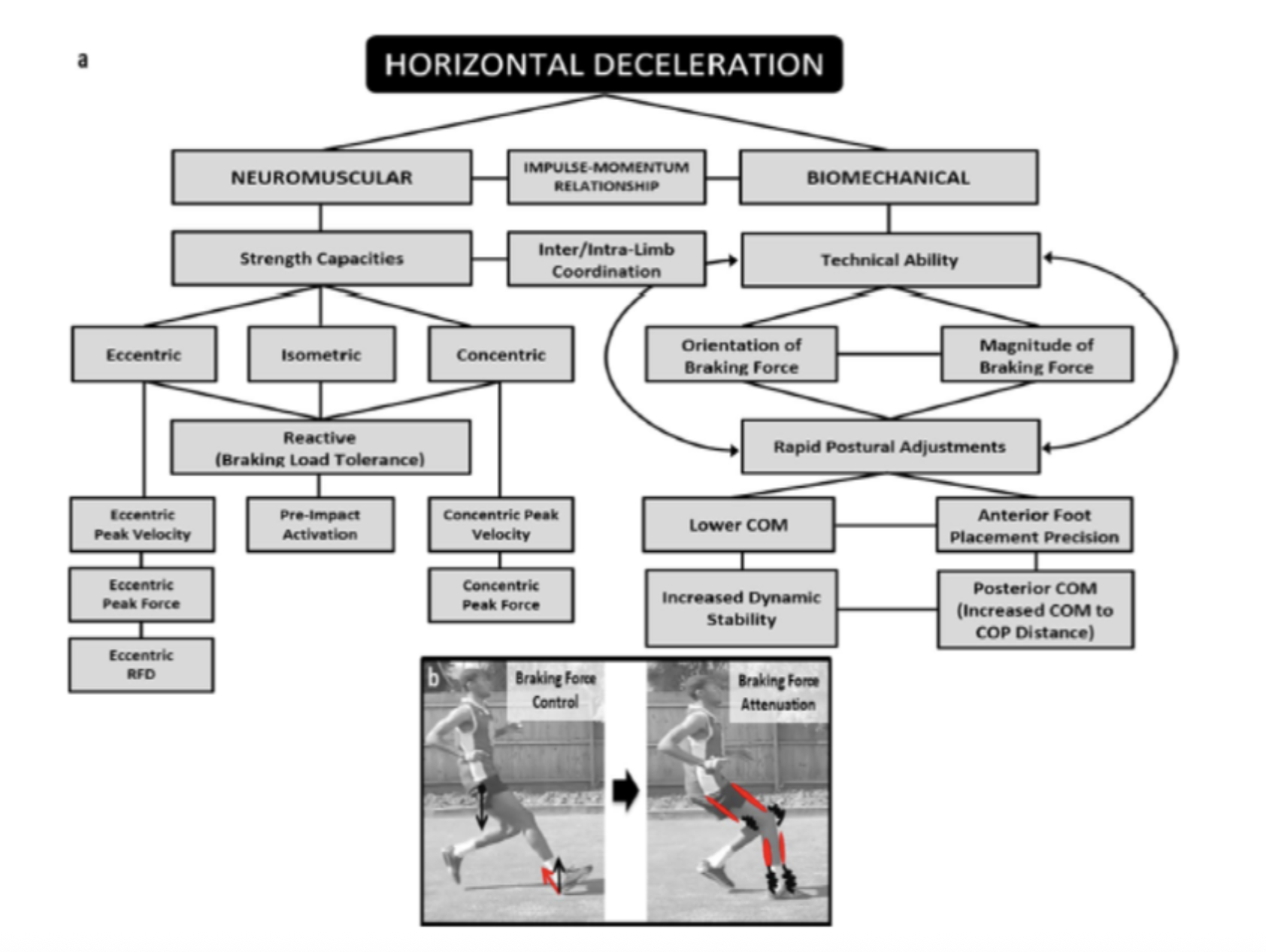
As you can see, athletes must do both field and gym training to truly improve their ability to decelerate. Strength of the quadriceps, hamstrings and gluteals allows athletes to control their center of mass, get low, and brake efficiently before re-accelerating in another direction, so they need to get strong as their foundation first.
They must focus on building eccentric strength with deadlifts, squats, single leg squats, and split squats, which allows for better resiliency against braking forces.

They must also be coordinated, meaning their lower body connects to their upper body, left connects to right side, and everything works in conjunction to keep the athlete balanced. Soccer players, for example, assume they need to be all legs because they play their sport with their lower bodies. But, they must also have the upper body strength and trunk control so they don’t trip over themselves or move inefficiently during braking and changing direction movements. Athletes who have poor trunk stability will lean toward their plant foot when changing direction, making them not only step a behind, but at risk for an ACL tear.
Start with strength first as it cleans up a lot of change of direction mechanics and provides soccer players the foundation to brake and re-accelerate well.
Then, learn the technical component to agility through actual on-field agility drills.
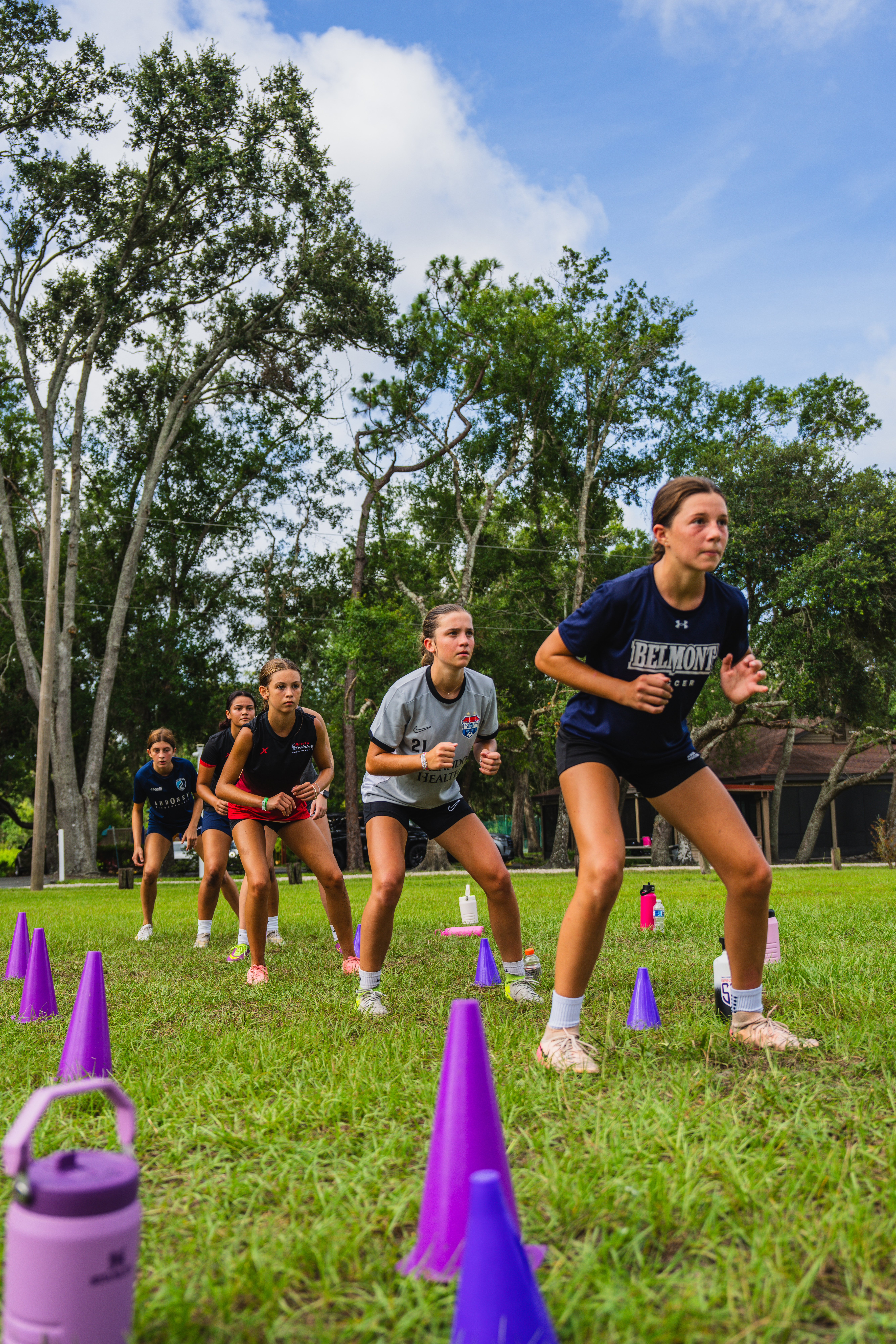
Being able to get low while braking and changing direction at multiple angles (45, 60, 90, 180, 210 degree cuts) is a skill that must be taught.

The mistake youth athletes make is doing agility drills alone, with NO strengthening to support.
If the muscles, tendons and bones aren’t strong for high speeds, injury risk is high and inefficient movement will hold the athlete back a step or two.
Reactive Strength
Doing plyometrics helps to build a quality called Reactive Strength, which helps body to transition rapidly from braking to accelerating and producing force.
By maximizing Reactive Strength, soccer players minimize the time lost during these explosive transitions, making movements like cutting, stopping, and starting sharper and more crisp.
Sadly, most soccer players get plyometric training wrong, and they don’t rapidly transition between these phases. They do plyos too slow and their feet are clunky.
Example of true plyometric training, where athletes must pop off the ground like a ping pong ball:
The Final Piece to Agility
Agility is not agility without the reactive side. It’s being able to yes, move fast, but also think fast.
Soccer is a game of thousands of decisions that happen in a split second – where to run, when to get back on defense, when to attack space, and when to anticipate. If soccer players are slow thinkers, they will be slow and hold themselves back from elite agility.
Here in Lutz Florida, my agility training includes brain speed training – scanning, tracking, and reacting to various stimuli.
We do chase drills, mirror drills, dodge drills, and problem solving drills. Fun, task-oriented games win for being able to train a high level of brain speed. If athletes think slow, they’ll be slow.
Here is a sample of a full agility program, including the lifting and strengthening, the plyometrics, deceleration, and reactive work:
You’ll see that my athletes train barefoot in the gym, too.
When the feet can sense the ground, they can adapt to various environments faster, which helps with improving their cutting and changing direction speeds. The foot contains thousands of nerve endings to the brain, so when we strengthen this connection, we get faster movers and thinkers. Training barefoot gets athletes out of being “flat footed” and helps them to push off the ground better for improved explosiveness. Go barefoot as much as possible!
Improving agility in soccer players takes a holistic approach.
You can only do so many field drills, until your body needs the strength support to be able to brake and accelerate fast at high speeds.
And you can do so many rehearsed drills where the athlete knows where they’re going, until they eventually need the fast decision making aspect of agility.
Do it all.
Train true agility.
Work with Erica in Tampa and Land O’ Lakes Florida for speed, agility, and strength training, OR late stage ACL rehab (must be at minimum 2-3 months into physical therapy and post-surgery to be considered): BOOK ASSESSMENT HERE
Interested in REMOTE TRAINING for Female Athletes? BOOK A CONSULT HERE
Get Erica’s book FEMALE ATHLETE HIGH PERFORMANCE
No Comments