

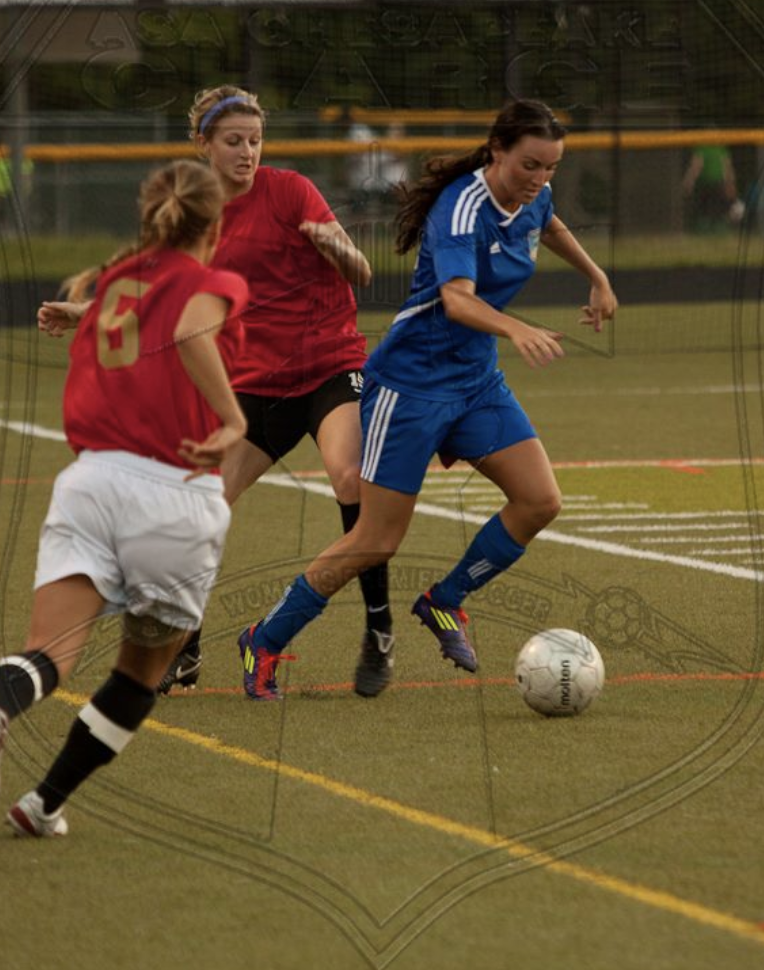
06 Aug Conditioning for Youth Girls Soccer Players: STOP Running Off the Ball and Wasting Practice Time
It’s been 7 years since I wrote my last major blog on conditioning for soccer players.
I’ll link it HERE if you’re curious to see how far I’ve come. This blog was written back in 2019, which means:
1. I’m old.
2. Soccer conditioning methods have evolved since then, and we have learned that there a better ways to train for the game.
And…
3. I’m old.
Man, have we come a long way. As I write this updated version in 2026, I can’t help but look back on that blog and bang my head against a wall.
Look, it wasn’t all bad. I at least had mentioned that jogging laps and running miles on end as conditioning is not ideal for youth soccer players.
This is because soccer is not just an endurance sport, but also a speed and power sport, where players must repeat high speed actions, such as short sprint, deceleration, and change of direction movements. Too, these movements are the ones when teams win or lose, OR when players get hurt or stay healthy. We must train these actions in our conditioning.

I hope we are past doing the timed two mile test, making our players run endless laps, or having our players warm up with the good ol’ lap around the field by now. If you’re still doing all of that, you’re a dinosaur and need to catch up to the times.
What Does it Mean to Be Soccer Fit?
I already mentioned the energy systems at play in soccer. We must train aerobic, alactic and anaerobic conditioning so players can last the game, but repeat those high speed actions in the second half, too.
The next layer to being conditioned for soccer is the cognitive piece. Soccer is a thinking game. Players make thousands of decisions the moment the game begins – what runs to make, where to play a through ball, when to cover space, when to anticipate, when to shoot, when to take a 1v1.
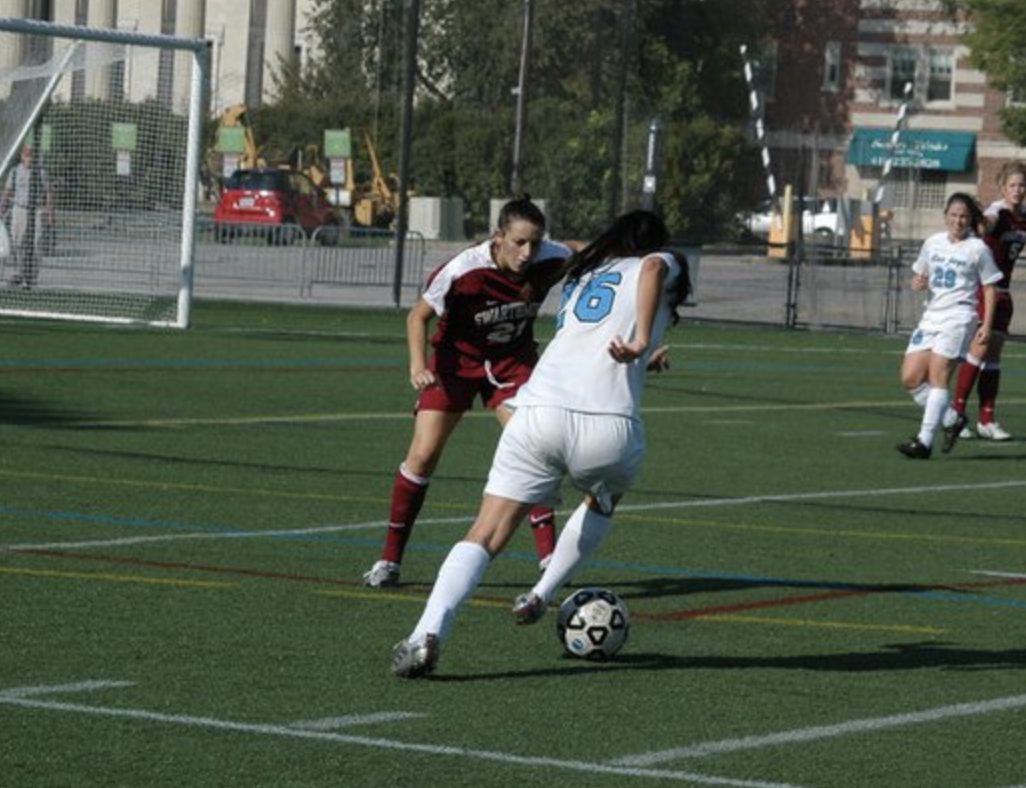
Soccer conditioning must not just train the cardiovascular and muscular demands, but it must train mental demands. This is because when players begin to fatigue, their decision-making fatigues first. Their passes get sloppy. Their first touch isn’t as sharp. Their anticipation into space is a step behind. Their body positioning to receive the ball is late. They don’t make a sprint to the ball in time.
I’m ashamed that I used to only do conditioning off the ball with my girls soccer players. I loved having my girls run suicides, gassers, 120s, the beep test. And while these are way better than the timed 2 mile, I still was holding their soccer development back and not truly making them soccer fit.
Disclaimer: The only times I train off the ball conditioning are two scenarios: 1. If I have a remote athlete I’m writing an off season plan for and she’s training by herself and isn’t in a group setting or 2.) If I have a girl coming back from an injury, she’s still in Phase 1 of return to play, and we need to build her aerobic base before getting into a high speed, chaotic game setting.
Other than that, everyone else is doing conditioning on the ball.
Small-Sides Games for Soccer Conditioning
The best thing about small-sided games is you can design them to get the desired aerobic or anaerobic effect, while also getting the cognitive transfer to soccer. You’re training the cardiovascular, muscular, and nervous system all at once, which is what soccer players need to play their best come game time.
If you need players to build more of an aerobic base, you increase the size of the small-sided game, with a longer duration (i.e. 5-7 minute games).
However, I’ve found most girls soccer players nowadays don’t really lack an aerobic base. This is because they’re now year-round athletes, practicing with their club teams 3-5x a week, with games on the weekends. Unless their coaches have them standing around at practice, then they might need more aerobic work. But this is rarely the case.
What girls soccer players need more of are the high intensity actions – short bursts into space, hard decelerations, and more cognitive load to force them to think quickly in high pressure situations.
To set this up in a small-sided game, you can make the field smaller (15x15yd), have the ball constantly be in play, and have players score by passing into an end zone. A 4v4, 5v5, or 6v6 scenario can work very well here, and to challenge the conditioning more, you can switch off between the team that plays down a player.
There are endless ways to make soccer small-sided games hard with an amazing conditioning and cognitive effect.
But What About Fitness Tests for Her Team?
I get that most top club teams and D1 college soccer programs do the beep test, the Bronco test, etc.
And I’m not saying don’t practice these. You do have to practice them a few times to mentally prepare and know how to pace yourself.
Where players mess up is they run the Beep test or their fitness test every. damn. week.
They make passing the fitness test the focus of summer off season soccer conditioning when they should be working on the qualities that make them stronger, more explosive, more efficient and injury free.
When girls soccer players work on these foundations to efficient movement – strength, speed and power – then they will find they expend LESS energy during conditioning tests. They sprint with coordination and ease. Their mechanics are so clean it looks effortless. Their hamstrings don’t give out during the final sprints of the Beep Test.
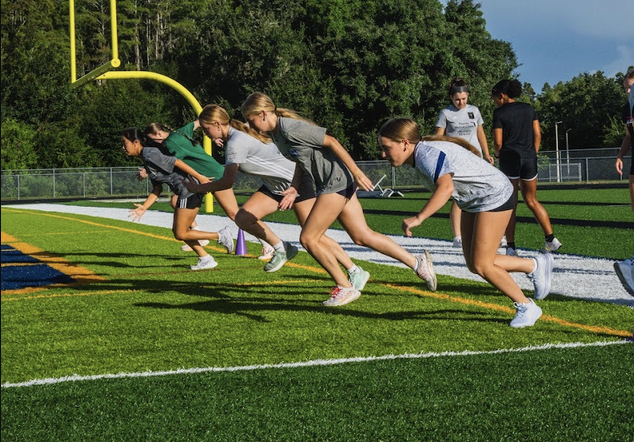
And better yet, the day after, they recover QUICKLY and can do the next practice without crippling soreness.
I Stopped Conditioning Off the Ball in a Group Setting
I worked with over 30 girls soccer players this past Summer in Tampa, Florida for my speed, agility, strength training off season program. We did two days of strength training in the gym, one day of acceleration and speed, and the fourth day was agility, multi-directional speed, and playing soccer for conditioning.
Not once did we run a suicide. Not once did I condition them off the ball. Not once did I have them run full field sprints. Not once did we jog laps.
We got strong. We worked on movement quality. We worked on deceleration and change of direction mechanics repeatedly. We raised the ceiling on their max speed. We build coordination, balance, and core stability. We built their cardio by playing soccer small-sided games. We trained their brains and their speed of play by playing tight and high pressure small-sided games. We got them insanely strong so their muscles could recover fast during preseason nonsense.
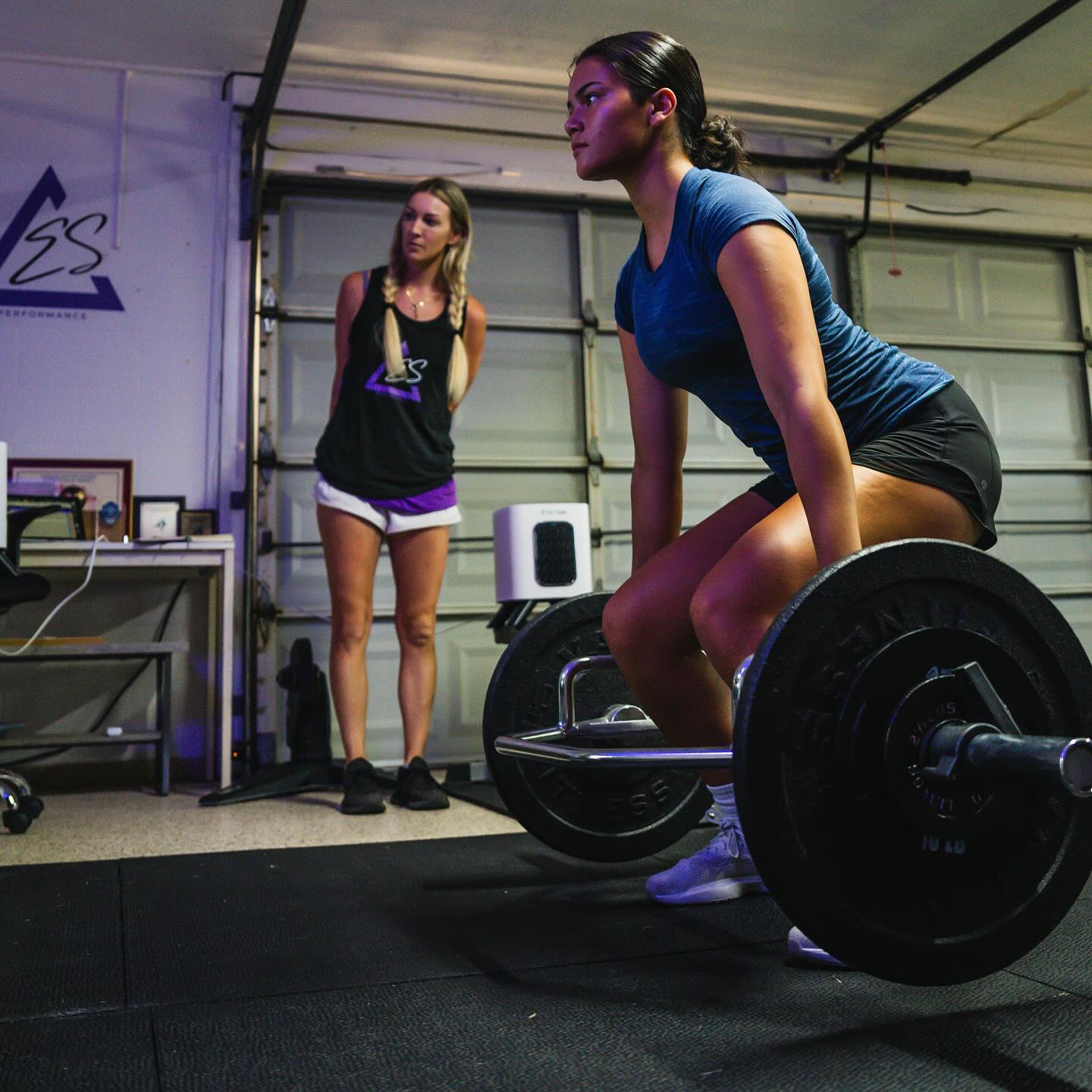
The irony of all of this is: my girls soccer players went back to their club teams here in Tampa Florida for day one preseason, and they were told that day they had to run the Bronco test. They weren’t told until they arrived that day, which means, not once did they run it all summer.
And guess what happened? My girls all got above average and top scores on their club soccer teams!
You might be surprised, but I’m not surprised at all.
Because when girls are stronger, faster, and more powerful, the more likely they can plow through a test like this. Not to mention, their movement quality is so good, they weren’t expending as much energy as a girl who moves awkward and who is weak.
Awkward moving and weak girls have to fight for their lives to survive fitness tests like these.
My girls didn’t survive. They THRIVED.
Not only are they the fittest on their teams, but they’re ready for SOCCER. Isn’t that the point of training? To support what they do in a game?
They trained to be soccer fit. Not just test fit. Although, when they trained to be soccer fit, them passing their fitness test was a nice byproduct.
Train for the game. Become strong and resilient to injury. Raise the ceiling on top speed. The rest works out.
I’ll end the blog post right there.
Peace.

Work with Erica Mulholland, an internationally known youth female athlete trainer in Tampa (Land O’ Lakes Florida) for speed, agility, and strength training, specialist in growth spurt injuries, and late stage ACL rehab (must be at minimum 2-3 months into physical therapy and post-surgery to be considered): BOOK ASSESSMENT HERE
Interested in REMOTE SPEED AND STRENGTH TRAINING for Youth Female Athletes? BOOK A CONSULT HERE
No Comments