


10 Nov ACL Prevention for Female Athletes: Don’t Mess Up Speed and Agility Training Prior to Age 14
I am getting emotional writing this but…
It’s better to build strong girls than repair broken women.
Pediatric ACL cases are drastically higher than they were in the early 2000s. What used to be an injury more common in highly competitive professional athletes, is now impacting youth female athletes as young as age 11 who play on their local rec team.
First, we thought it was female anatomy. Knee valgus. The menstrual cycle.
But more than these female specific factors, the root of the problem is far deeper.
The New Youth Sports Landscape
So what has changed since the early 2000s? Youth female athletes are now victims of an organized sports model that requires them to undergo high intensities and the same repetitive movements in their sport year-round.
More practices, more competitive games, more five-game tournament weekends, more skills camps. Oh, and don’t forget more social media influence to do EVEN MORE.
The cult of more year-round sport load is killing youth female athletes.
This sums up the majority of youth female athletes today:

And if this graphic above is your daughter, it’s time rethink your life.
Kidding, except I’m not. ;-O
Too many youth female athletes are now are getting way too much of what is called “break down” training, meaning the repetitive, high stress loads from sport.
If your daughter is a soccer player, for example, if she plays year-round, several days a week, her ACL has no opportunity to repair from hard the decelerations, sprints, and changes of direction in practices and games.
This is break down training. As a result, the ACL begins to fray starting at a young age, and it’s only a matter of time until something potentially snaps when she’s older. ACL injuries are a fatigue accumulation injury from too much SPORT SPECIFIC LOAD too young.
This is why I can’t stress proper athletic development enough, ESPECIALLY starting for girls under age 14.
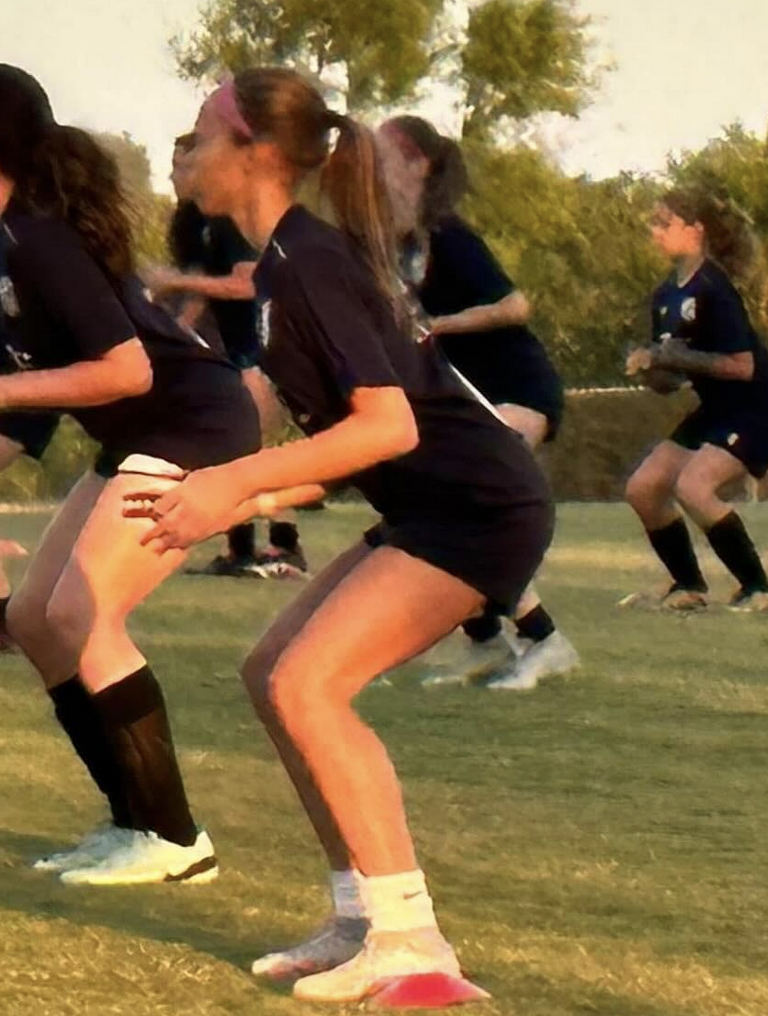
Pre-puberty is the optimal window to build soft tissue, especially ligaments. Ligaments love variety. They hate repetitive movements.
Ligaments build collagen through new stimuli, new loads, and new ranges of motion.
And by variety I mean good ol’ motor skill development through – deep squatting, crawling, lunging, climbing, jump roping, hopping, balancing, skipping, hanging, landing, twisting, rolling, roughhousing, pushing, pulling, – you know, all the movements we naturally got if you grew up in the 1980s or 1990s.

Now, play is replaced with organized sport.
Or worse yet, you send your young girl to a speed guru who wants to grow his Instagram following and have your 10-year-old girl go through more REPETITIVE MOVEMENTS that just look cool.
You know, the guy who has your daughter do the same exact running motions as soccer in his training sessions and has her run through ladders, rings, and hurdles while screaming “knees up knees up!” “quick feet quick feet!”
If your daughter is under age 14, well, ANY age for this matter, this is the worst type of training for her to do. Run the other direction NOW.
She needs variety. She needs a youth strength and conditioning specialist who understands motor skill development, physical education, and long-term athletic development.
And parents, you need to actually want development for her. I have this horrible feeling that many of you sports parents say you want development, but your actions show otherwise: you hire a trainer who provides the flash and quick fix.
And you roll your eyes at us long-term athletic development nerds who understand movement quality and motor learning, growth and maturation, youth physiology, and who will actually take care of your daughter long-term.

Build Strong Girls: What They Really Need
The younger a female athlete is (~under age 14 and pre-puberty), her training should lean more toward these things:
Motor skill development
Movement variety
Movement pattern learning, then progressive weight training
Reactive ability, scanning, spatial awareness
Elasticity more than max strength (yes, lift weights during growth, but your 12-year-old does not need to be back squatting like a power lifter!)
In fact, young girls are best getting a ton of fast twitch development through elastic inputs like hops, leaps, bounds, and high speed sprints in a gamified and fun setting. Again, it’s not about doing the most advanced hurdle drill with a ton of instruction, it’s about variety of plyos and learning to pop off the ground quick with intent. Variety of plyos, surfaces, even barefoot. The nervous system is highly plastic young! Too, they thrive off of fun and their intent in training becomes intense without them even knowing!
Expounding further, your under 14 year-old can delay heavy lifting. Look, I’m all for heavy lifting when girls have had tons of years of proper athletic development young and are in high school, but too often, young kids don’t even benefit from squatting 1.5x body weight and it actually slows down those elastic qualities.
I’m not impressed with heavy strength numbers at the younger ages. It’s best to lean more toward elastic and explosive work younger. (Start her speed training journey HERE)

This doesn’t means 10-14 year-olds can’t learn strength training. They must and should! But it will look vastly different than a high school upperclassmen who has been training for years.
For my 10-14 year olds, we start with movement quality first with body weight, then add external load. Some girls progress faster than others – some stick with dumbbells, some move to barbells. But I’m still not chasing powerlifting numbers young at expense of their elastic, reactive and explosive qualities.
Her ACL loves variety – deep ranges, new planes of motion, new challenging loads and stimuli, and new ways to build the brain. (START TRAINING HERE)
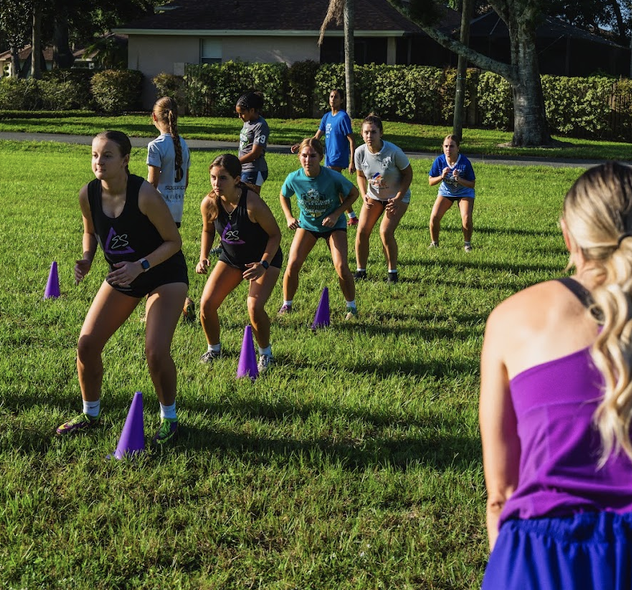
More research is showing that slow reactive ability results in more ACL injuries. When girls can’t react to an opponent or their surroundings, they end up having poor lower extremity control. This is why I love racing, mirroring, chasing, and reacting speed drills so it trains their brains to think fast and eyes to stay up.
Get Rough!
And lastly, we have to remember that young girls aren’t delicate flowers. They should train rough so it prepares them for contact sports. Not enough girls are doing roughhousing anymore. Maybe they don’t have a sibling or brother to fight with. Maybe their trainer is having them do super controlled bs with no opposition.
Girls need to learn to get comfortable with contact. Otherwise, they’ll be hesitant in tackles. They won’t be able to hold their own.
I do roughhousing with my girls every week (even my remote training girls do roughhousing if they’re training with their siblings or their parents!)
We do various shielding games, whether it’s holding your partner on the ground so they can’t get up, or pushing your partner out of a box:
So parents of youth female athletes, if your girl is under age 14, this is a critical time window to give her body the proper inputs to actually make her resilient.
Stop with the specialized training young.
Stop with the bs unopposed skill work.
Stop with the speed trainer who throws out ladders.
Stop with the repetitive training that is the exact same as her sport.
Stop having her run 2 miles on her rest day!
Stop with the flashy nonsense.
Stop with the quick fixes.
And stop saying you don’t have time for athletic development! This is the time to lean more into it when she’s young and malleable. We will never get these optimal years of motor development back.
Give her training that has variety, fun, motor skill learning and movement patterns, and long-term athletic development.
It’s better to build your girl now, than repair a broken woman later.

Work with Erica Mulholland, an internationally known youth female athlete trainer in Tampa (Land O’ Lakes Florida) for speed, agility, and strength training, specialist in growth spurt injuries, and late stage ACL rehab (must be at minimum 2-3 months into physical therapy and post-surgery to be considered): BOOK ASSESSMENT HERE
Interested in REMOTE SPEED AND STRENGTH TRAINING for Youth Female Athletes? BOOK A CONSULT HERE
No Comments